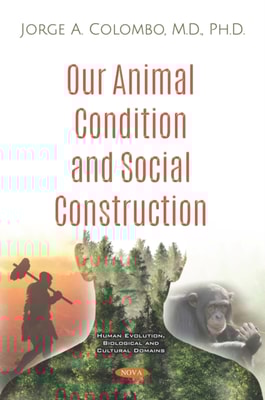
This book chronologically documents the rise and fall of the major religions of the world and explores the role that various cultural factors such as dance, trance, music, song, and language have played in this evolution.
The remarkable story of a "e;talking"e; chimp, a leading scientist, and the profound insights they have uncovered about our speciesHe has been featured in cover stories in Time, Newsweek, and National Geographic, and has been the subject of a "e;NOVA"e; documentary.
This book introduces the Chinese boletes, including the history, ecological and economic values, as well as the geographical distribution patterns with a highlight on the Tylopilus species.
In Evolution by the Numbers: The Origins of Mathematical Argument in Biology, James Wynn examines the confluence of science, mathematics, and rhetoric in the development of theories of evolution and heredity in the nineteenth century.
In Evolution by the Numbers: The Origins of Mathematical Argument in Biology, James Wynn examines the confluence of science, mathematics, and rhetoric in the development of theories of evolution and heredity in the nineteenth century.
Examining the evolution debate from different aspects, this study points out the divergent uses of evolution and it posits a scientific argument against the theory of evolution, and includes rational explanations derived from the Islamic understanding of creation.
THE TIMES BEST SCIENCE BOOK OF 2024GUARDIAN BEST IDEAS BOOKS OF 2024ECONOMIST BEST BOOKS OF 2024FINANCIAL TIMES BEST BOOKS OF 2024From one of the world's great science writers, a book that explores the deepest principles of evolutionary history.
Despite many encouraging developments in the field of animal-free technologies, well-defined animal models are still needed to study fundamental properties of human diseases and to develop new prophylactic and therapeutic treatments against human diseases.
Due to the phylogenetic relationship and close genetic and biological similarities with humans, non-human primates (NHP) are regularly used in biomedical and behavioural research.
The Zoological Guide to Crustacea opens by providing an update on the cave crustacean decapods from Mexico, because in the last thirty years several species have been described.
Our species origin has its roots in ancestral habits, behaviors and survival drive, through changing environmental conditions, and crystallized during millennia in basic neurobehavioral circuits, be it as predators or potential prey: we were not born in a mother-of-pearl cradle and protected by magic agents.
A biomarker is a biochemical, cellular, physiological or behavioral variation that can be measured in tissue or body fluid samples or at the level of whole organisms that provides evidence of exposure to and/or effects of one or more chemical pollutants or radiations.