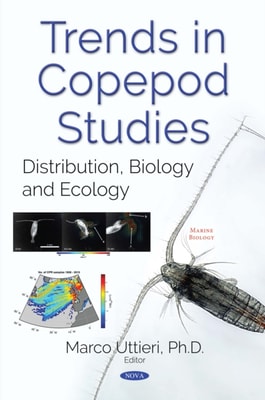
Copepods, or more commonly referred to as the "e;insects of the sea"e;, have successfully colonised every aquatic environment, equating insects in terms of absolute and relative success.
Is Darwinian evolution really the most successful scientific theory ever proposed--or even the best idea anyone has ever had, as Daniel Dennett once put it?
'Thrilling, provocative and mind-expanding' Mail on Sunday'Masterful and illuminating' DAVID EAGLEMAN Dr Joseph Jebelli takes us on a seven-million-year journey through our own heads, drawing on insights from neuroscience, evolutionary biology, psychology, and philosophyto reveal how our brain's evolution turned us into Homo sapiens and beyond.
Directed Evolution Library Creation: Methods and Protocols, Second Edition presents user-friendly protocols for both proven strategies and cutting-edge approaches for the creation of mutant gene libraries for directed evolution.
Published in 1871, The Descent of Man is Charles Darwin's groundbreaking work that systematically applies his theory of evolution by natural selection to the human species.
This final volume of the monumental Zoology series, published in 1843, documents the herpetological specimens collected by Charles Darwin during the five-year expedition of H.
This book simulates a historical walk through nature, teaching readers about the biodiversity on Earth in various eras with a focus on past terrestrial environments.
This book explores the global technological transformations that have shaped development of society for eons, from the emergence of Homo sapiens to the modern day.
On the Origin of Species outlines Charles Darwin's world-changing theory that life on Earth had not been brought into being by a creator, but had arisen from a single common ancestor and had evolved over time through the process of natural selection.
These three major works by the father of evolutionary theory encompass his life, journey through the Galapagos, and landmark work on natural selection.
Darwin's most famous work formed the bedrock of evolutionary biologyIn one of the most important contributions to scientific knowledge, Charles Darwin puts forth the theory that species evolve over time through the process of natural selection.
In this ';deeply personal and lyrical book' (Publishers Weekly) from the New York Times bestselling author of The Horse, Wendy Williams explores the lives of one of the world's most resilient creaturesthe butterflyshedding light on the role that they play in our ecosystem and in our human lives.
An "e;invaluable [and] highly readable"e; account of the quest to map our DNA, the blueprint for life-and what it means for our future ( The Philadelphia Inquirer).
This volume provides insight into gibbon diet and community ecology, the mating system and reproduction, and conservation biology, all topics which represent areas of substantial progress in understanding socio-ecological flexibility and conservation needs of the hylobatid family.
Given the rapidly developing area of evolutionary medicine and public health, The Arc of Life examines ways in which research conducted by biological anthropologists can enrich our understanding of variation in human health outcomes.
This book demonstrates how the primate hand combines both primitive and novel morphology, both general function with specialization, and both a remarkable degree of diversity within some clades and yet general similarity across many others.
This book presents cutting edge methods that provide insights into the pathways by which salt and water traverse cell membranes and flow in an orchestrated fashion amongst the many compartments of the body.
The new edition of this authoritative text provides an interdisciplinary treatise of all aspects of the interactions between light and the living world.
The revised and expanded edition of this textbook presents the concepts and applications of random processes with the same illuminating simplicity as its first edition, but with the notable addition of substantial modern material on biological modeling.
This book collects three outstanding examples of the work of Mexican biologist Alfonso Luis Herrera (1868-1943), a pioneer in experimental origins of life research.
Innovative Strategies for Teaching in the Plant Sciences focuses on innovative ways in which educators can enrich the plant science content being taught in universities and secondary schools.