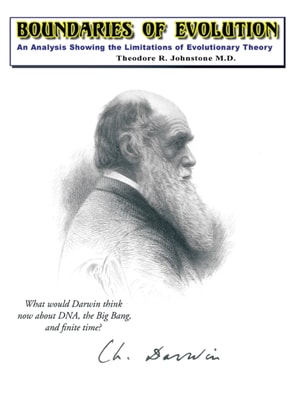
This book is designed to share the research on the origins of the universe and the origins of life with those who are truly interested in making their decisions regarding origins as well as those who are simply curious about opposing views.
The book is a telepathic communication between myself and Dar, a evolved human from 23 million years in the future, as well as several other guides, spiritual and otherwise, from various future time periods.
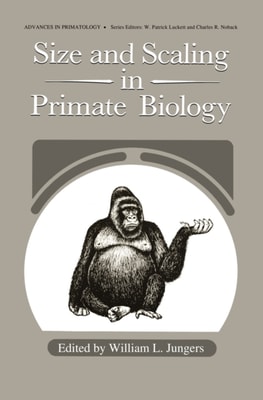
In very general terms, "e;scaling"e; can be defined as the structural and func- tional consequences of differences in size (or scale) among organisms of more or less similar design.
The contribution of bacteriophages to the development of modern biology cannot be overestimated yet, sixty years after their discovery, they are as remote and mysterious to many scientists as they are to most laymen.
The predecessor to this book was A Guide to the Laboratory Use of the Squid Loligo pealei published by the Marine Biological Laboratory, Woods Hole, Massachusetts in 1974.
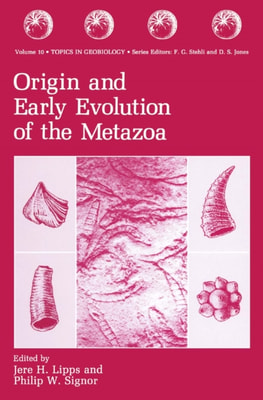
Several years ago, we realized that the most prominent ideas that had been ex- pressed about the origin and early evolution of the Metazoa seemed to have been developed chiefly by zoologists using evidence from modern species without reference to the fossil record.
Thrips (fhysanoptera) are very small insects, widespread throughout the world with a preponderance of tropical species, many temperate ones, and even a few living in arctic regions.
The past decade has witnessed an explosion of information on the molecular biology of insect viruses and a frenzy of activity in applying this information to medicine and agriculture.
The order Rodentia is the most abundant and successful group of mammals, and it has been a focal point of attention for compar- ative and evolutionary biologists for many years.
Research in whale origins is now in an explosive phase, with a cascade of discoveries adding to our understanding of the evolutionary pattern and a suite of new techniques being applied to address new questions.
The study of primate locomotion is a unique discipline that by its nature is interdis- ciplinary, drawing on and integrating research from ethology, ecology, comparative anat- omy, physiology, biomechanics, paleontology, etc.
This book explores periodization in Big History against the background of complexity growth across the Universe, on our planet, and in biological, social, and cultural systems.
This book provides an in-depth analysis of the hypothesis of chemical evolution that may have led to the origin of life, serving three main purposes: it provides a comprehensive summary of hundreds of chemical experiments and analytical studies from the past 70 years, evaluates their significance in supporting the hypothesis of chemical evolution, and offers a critical review of these experiments and hypotheses.
Canada's flora, although it does not display the richness of a tropical flora nor the antiquity of an old world flora, is unique in its newness; for the most part it began with the last glaciation and is still expanding northward as glaciers recede and climate moderates.
The papers that are presented in this volume are the results of a resolution to organize a symposium that would include biographical and historical sketches of Davidson Black.
The publication in 1859 of Charles Darwin's On the Origin of Species touched off a violent controversy which, when the tumult had died down, left the theory of biological evolution firmly established.
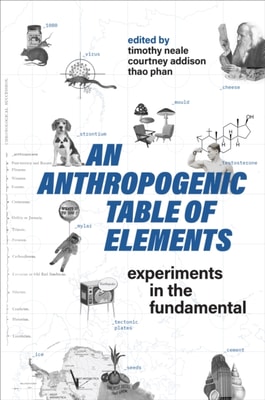
An Anthropogenic Table of Elements provides a contemporary rethinking of Dmitri Mendeleev's periodic table of elements, bringing together "e;elemental"e; stories to reflect on everyday life in the Anthropocene.
An Anthropogenic Table of Elements provides a contemporary rethinking of Dmitri Mendeleev's periodic table of elements, bringing together "e;elemental"e; stories to reflect on everyday life in the Anthropocene.
This book gives an overview of gene transfer and stability in those aquatic and terrestrial environments where bacteria and fungi can survive and interact genetically.