THE NEW YORK TIMES BESTSELLERRichard Dawkins - author of The Selfish Gene, The Blind Watchmaker, and The God Delusion - is one of science's greatest communicators.
An enthralling voyage of discovery to meet a rare and mysterious bird of prey that puzzled Darwin, fascinates modern-day falconers, and carries secrets of our planet's deep past in its family history.
Leading scholars take stock of Darwin's ideas about human evolution in the light of modern scienceIn 1871, Charles Darwin published The Descent of Man, a companion to Origin of Species in which he attempted to explain human evolution, a topic he called "e;the highest and most interesting problem for the naturalist.
Twelve years after the revolutionary publication of On the Origin of Species, Charles Darwin finally turned his formidable scientific method to the most controversial creature of all: man.
For most of us, the story of mammal evolution starts after the asteroid impact that killed the dinosaurs, but over the last 20 years scientists have uncovered new fossils and used new technologies that have upended this story.
Our brains evolved to solve the survival problems of our Stone Age ancestors, so when faced with modern day situations that are less extreme, they often encounter a mismatch.
This volume is the result of a NATO Advanced Study Institute held in England at Kingswood Hall of Residence, Royal Holloway College (London University), Surrey, during the last two weeks of July, 1976.
Ecological and evolutionary genetics span many disciplines and virtually all levels of biological investigation, from the genetic information itself to the principles governing the complex organization of living things.
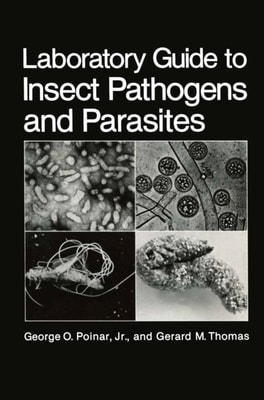
After the publication of the Diagnostic Manual for the Identification of Insect Pathogens, the authors received many queries asking why they had not included the larger metazoan parasites as well as the microbial forms.
The juvenile hormones of insects are unique molecules in terms of their chemical nature (methyl esters of sesquiterpene epoxides) and action (both as modulators of morphogenesis during the larval life of insects and as a gonadotropic agent in many female adults).
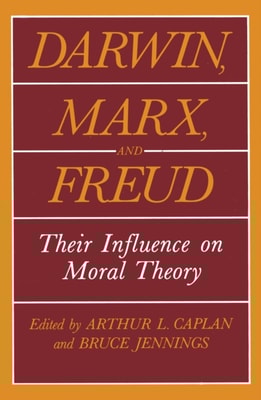
hope of obtaining a comprehensive and coherent understand- ing of the human condition, we must somehow weave together the biological, sociological, and psychological components of human nature and experience.
From time to time, perhaps a few times each century, a revolution occurs that questions some of our basic beliefs and sweeps across otherwise well guarded disciplinary boundaries.
The text of this monograph represents the author's lecture notes from a course taught in the Department of Applied Mathematics and Statistics at the State University of New York at Stony Brook in the Spring of 1977.
It is appropriate at the outset of this book to pose a question that was often asked --of the organizers before the meeting took place and later among those who participated in the meeting -- "e;What is meant by 'Systems Approaches' in the study of developmental neurobiology?
Integrated regional models are conceptual and mathematical models that describe the physical environment, biological interactions, human decision-making, and human impact on the environment.
The microorganisms present on the earth today possess a vast range of metabolic activities and are often able to demonstrate their surprising versatility by gaining both new enzyme activities and new metabolic path- ways through mutations.
In recent years, an ever-increasing amount of research has been conducted on the physico-chemical basis of the origin and evolution of life, or protobiology.
At the 1980 Christmas meetings of the American Society of zoologists in Seattle, Washington, the Division of Comparative Physiology and Biochemistry sponsored a symposium on the locomo- tion and exercise of arthropods.
The discovery of insect neurohormones dates from the earliest experimental in- vestigations in insect endocrines, and the matter cannot be discussed without evoking the names of its pioneers-Kopec, Wigglesworth, Fraenkel.