When the history of immunology in the twentieth century is written, the decade of the 1960's will, in all probability, stand out as the period of greatest advance in the development of molecular immunology.
When the present symposium was first conceived, it was decided that more emphasis be given to contributions from biological laboratories than has typically appeared in previous bionics meetings.
Intoxication of humans and animals has become increasingly important in recent years as has contamination of the environment by a variety of chemicals.
In this book I have attempted to chart a path for the reader toward understanding how rigorous empirical scientific thought and solid, informed as well as inspired religious faith are in fact congruent with respect to evolution.
The sequence of the formation of the universe, including Big-Bang stage, quantum cosmology, quarks and leptons stage, Inflation stage, hadrons stage and atomic nuclei stage are described in the book.
In this scientifically authoritative essay collection, Salzman, a seasoned and provocative environmentalist, demonstrates how evolutionary theory penetrates nearly all aspects of human society.
It is not often that one has the opportunity to send a public birthday greet- ing to a friend and colleague of many years, and to congratulate him on having reached the age of reason.
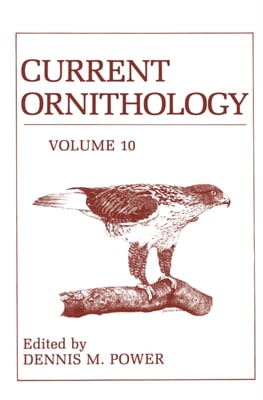
Detailing novel research methods, this compilation presents major advances in fundamental aspects of phylogeny, mating, parental care, the trophic structure of Raptor communities, demography, behavioral ecology, species diversity, and the evolution of avian ontogenies.
In 1962 at the Burg Wartenstein Symposium on "e;Classification and Human Evolution,"e; Emile Zuckerkandl used the term "e;molecular anthropology"e; to characterize the study of primate phylogeny and human evolution through the genetic information contained in proteins and polynucleotides.
This volume contains the invited lectures presented in a symposium entitled "e;Evolutionary strategies of parasitic insects and mites"e; at the national meeting of the Entomological Society of America in Minneapolis, Minnesota, 2-5 December, 1974.
One of the attractive features of the great classical ethologists was their readiness to ask different kinds of questions about behavior - and to do so without muddling the answers.
Evolutionary Biology, of which this is the twenty-first volume, continues to offer its readers a wide range of original articles, reviews, and com- mentaries on evolution, in the broadest sense of that term.
Evolutionary Biology, of which this is the nineteenth volume, continues to offer its readers a wide range of original articles, reviews, and com- mentaries on evolution, in the broadest sense of that term.
Evolutionary Biology, of which this is the eighteenth volume, con- tinues to offer its readers a wide range of original articles, reviews, and commentaries on evolution, in the bro~dest sense of that term.
This book contains the proceedings of the "e;First International Symposium on Insect Pheromones,"e; which was held at Wageningen, The Netherlands, from March 6 to March 11, 1994.
Refecting what a new generation of conservation biologists is doing and thinking, this vital and far ranging second edition explores where conservation biology is heading.
This new textbook for students taking courses in evolution is addressed to one of the most difficult questions evolutionary biology, that of selection.
Standing at the intersection of evolutionary biology and feminist theory is a large audience interested in the questions one field raises for the other.
When Nancy Beckage and I first met in Lynn Riddiford's laboratory at the University of Washington in the mid 1970s, the fields of parasitology, behavior, and endocrinology were thriving and far-flung--disciplines in no serious danger of intersecting.
In the summer of 1993, twenty-six graduate and postdoctoral stu- dents and fourteen lecturers converged on Cornell University for a summer school devoted to structured-population models.
Following the original initiative of the International Organisation for Biological Control some 15 years ago, research groups and agrochemical companies have been investigating the effects of pesticides on beneficial organisms, devising laboratory and field test methods and lately developing protocols for regulatory testing requirements in Europe.