A "e;biological clock"e; has now been inferred in so many and such diverse organisms and tissues that even a summary of the more interesting and important observations would be a tedious and encyclopaedic compila- tion, whose bibliography would assume a daunting size.
Cell biology is moving at breakneck speed, and many of the results from studies on insects have helped in understanding some of the central problems of biology.
Among living vertebrates bats and birds are unique in their ability to fly, and it is this common feature that sets them apart ecologically from other groups.
Comparative endocrinology is one of the most rapidly developing subdis- ciplines within the field of endocrinology, and it is having a significant impact on research at the molecular, cellular, organisma1 and environmental levels.
Thanks to the meticulous and enthusiastic work of insect collectors and taxonomists over the past hundred years and more, we have today a large amount of information on the feeding habits and life styles of sev- eral hundred thousands of insect species.
Evolutionary Biology, of which this is the twenty-second volume, continues to offer its readers a wide range of original articles, reviews, and commentaries on evolution, in the broadest sense of that term.
The most striking fact revealed by investigations of insect neurohormones is that insects are as well supplied with neurohormones as mammals, since neurohor- mones regulate not only the functioning of the endocrine glands, prothoracic gland, and corpora allata, but also most physiological processes.
The mystery of how migrating animals find their way over unfamiliar terrain has intrigued people for centuries, and has been the focus of productive research in the biological sci- ences for several decades.
This book is a collection of articles studying various Steiner tree prob- lems with applications in industries, such as the design of electronic cir- cuits, computer networking, telecommunication, and perfect phylogeny.
The intent of this publication is to bring together reviews and discussions from several disciplines, all treating the basidium and basidiocarp of the Basidiomy- cotina (= basidiomycetes), a subdivision of the true or higher fungi.
The genesis of this volume was in a one-day meeting arranged under the auspices of the Nathematical Ecology Group, jointly of the British Region of the Biometric Society and the British Ecological Society, and held in the Natural History Museum in London on the 4th May 1982.
As the title suggests, this book presents an open ended system in which computer techniques facilitate encoding, entry, management, and analysis of microbiological data derived from the study of bacteria, algae, fungi, and protozoa.
This book focuses on a critical reexamination of two prominent categories used in modern historiography of biology - "e;the eclipse of Darwinism"e; and the "e;modern synthesis"e;.
While the discoveries of modern academia have deconstructed and replaced all of Victorian science in detail we remain addicted to the Darwinian theory of biological evolution.
In his characteristically iconoclastic and original way, Stephen Jay Gould argues that progress and increasing complexity are not inevitable features of the evolution of life on Earth.
Carl Zimmer tells the story of the theory of evolution from Darwin's journey on the Beagle to the controversies of modern evolutionary theory, the understanding of the lethal resurgence of antibiotic resistant diseases and the wave of species extinctions that face us today.
This book provides a conceptual and computational framework to study how the nervous system exploits the anatomical properties of limbs to produce mechanical function.
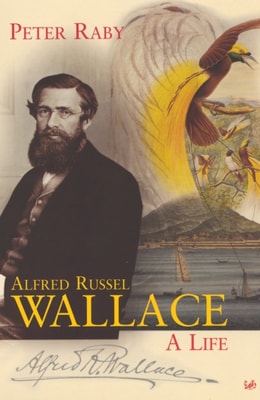
In 1858, aged thirty-five, weak with malaria, isolated in the remote Spice Islands, Alfred Russel Wallace wrote to Charles Darwin: he had, he said excitedly, worked out a theory of natural selection.
Discover this remarkable account of twenty-one years in remote Kenya with a troop of Savannah baboons from the New York Times bestselling author of Behave.
This comprehensive A to Z encyclopedia provides extensive coverage of important scientific terms related to improving our understanding of how we evolved.
This comprehensive A to Z encyclopedia provides extensive coverage of important scientific terms related to improving our understanding of how we evolved.
This collection of specially commissioned essays puts top scholars head to head to debate the central issues in the lively and fast growing field of philosophy of biology Brings together original essays on ten of the most hotly debated questions in philosophy of biology Lively head-to-head debate format sharply defines the issues and paves the way for further discussion Includes coverage of the new and vital area of evolutionary developmental biology, as well as the concept of a unified species, the role of genes in selection, the differences between micro- and macro-evolution, and much more Each section features an introduction to the topic as well as suggestions for further reading Offers an accessible overview of this fast-growing and dynamic field, whilst also capturing the imagination of professional philosophers and biologists