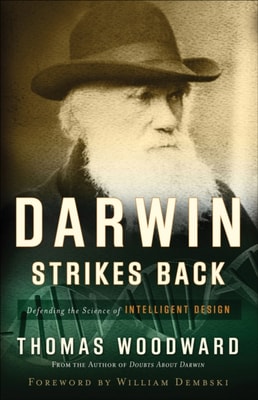
The definitive work on the philosophical nature and impact of the theories of Charles Darwin, written by a well-known authority on the history and philosophy of Darwinism.
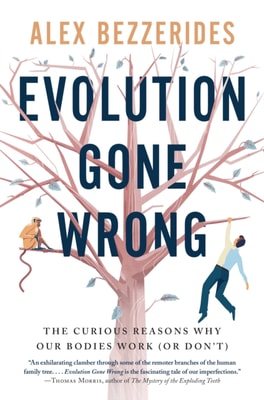
From blurry vision to crooked teeth, ACLs that tear at alarming rates and spines that seem to spend a lifetime falling apartits surprising that human beings have beaten the odds as a speciesEvolution Gone Wrong is an eye-opening look into why our bodies workor dontthe way they do.
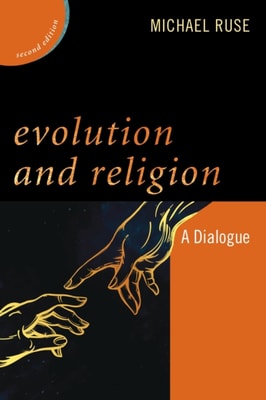
Michael Ruse, a leading expert on Charles Darwin, presents a fictional dialogue among characters with sharply contrasting positions regarding the tensions between science and religious belief.
The Encyclopedia of Entomology brings together the talents of over 350 distinguished entomologists from 36 countries to provide a detailed, global overview of insects and their close relatives, including taxonomy, behavior, ecology, physiology, history, and management.
The function of vertebrate hearing is served by a surprising variety of sensory structures in the different groups of fish, amphibians, reptiles, birds, and mammals.
A Beginner's Guide to Microarrays addresses two audiences - the core facility manager who produces, hybridizes, and scans arrays, and the basic research scientist who will be performing the analysis and interpreting the results.
Books on bioinformatics which began appearing in the mid 80s primarily served gene-hunters, and biologists who wished to construct family trees showing tidy lines of descent.
The inspiration for this volume of contributed papers stemmed from conversations between the editors in front of Chuck Hilton's poster on the determinants of hominid walking speed, presented at thel998 meetings of the American Association of Physical Anthropologists (AAPA).
Bioinformatics of Genome Regulation and Structure covers: -regulatory genomic sequences: databases, knowledge bases, computer analysis, modeling, and recognition; -large-scale genome analysis and functional annotation; -gene structure detection and prediction; -comparative and evolutionary genomics; -computer analysis of genome polymorphism and evolution; computer analysis and modeling of transcription, splicing, and translation; structural computational biology: structure-function organization of genomic DNA, RNA, and proteins; -gene networks, signal transduction pathways, and genetically controlled metabolic pathways: principles of organization, operation, and evolution; -data warehousing, knowledge discovery and data mining; and, -analysis of basic patterns of genome operation, organization, and evolution.
Since its inception, paleoanthropology has been closely wedded to the idea that big-game hunting by our hominin ancestors arose, first and foremost, as a means for acquiring energy and vital nutrients.
I first became involved in research into primate behavior and ecology in 1968, over 40 years ago, driven by a quest for a better understanding of the natural context of primate evolution.
Current Ornithology publishes authoritative, up-to-date, scholarly reviews of topics selected from the full range of current research in avian biology.
Most studies of bacterial or fungal infectious diseases focus separately on the pathogenic microbe, the host response, or the characterization of therapeutic compounds.
In Cosmic Biology, Louis Irwin and Dirk Schulze-Makuch guide readers through the range of planetary habitats found in our Solar System and those likely to be found throughout the universe.
Attention deficit disorder, attention deficit hyperactive disorder, pervasive developmental disorder, obsessive-compulsive disorder, asperger's syndrome, and autism, to name but a few, may be viewed as points on a spectrum of developmental disabilities in which those points share features in common and possibly etiology as well, varying only in severity and in the primary anatomical region of dysfunctional activity.
Winner, 2022 RUSA Outstanding Reference SourceThis encyclopedia provides readers with a comprehensive look at the Galapagos Islands, from the wildlife and scientists that made them famous to the challenges and issues the islands face today.
Research in recent years has increasingly shifted away from purely academic research, and into applied aspects of the discipline, including climate change research, conservation, and sustainable development.
Research in recent years has increasingly shifted away from purely academic research, and into applied aspects of the discipline, including climate change research, conservation, and sustainable development.
Covering the major topics of evolutionary game theory, Game-Theoretical Models in Biology presents both abstract and practical mathematical models of real biological situations.
A biologist's firsthand account of the hunt for life beneath earth's surfaceand how new discoveries are challenging our most basic assumptions about the nature of life on EarthLife thrives in the deepest, darkest recesses of Earth's crustfrom methane seeps in the ocean floor to the highest reaches of Arctic permafrostand it is unlike anything seen on the surface.
Presents archaeological evidence from the Azerbaijan-Japan excavations, revealing insights into Mesolithic to Neolithic transition and farming communities in the South Caucasus.
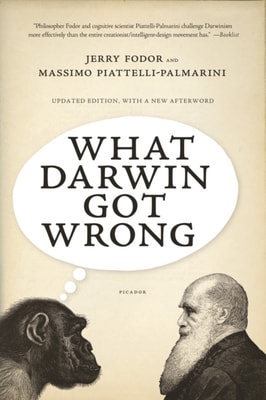
What Darwin Got Wrong is a remarkable book, one that dares to challenge the theory of natural selection as an explanation for how evolution works---a devastating critique not in the name of religion but in the name of good science.
A top researcher proposes a controversial new theory of human evolution in a book "e;combining the thrill of a novel with a remarkable depth of perspective"e; (Nature).
The fascinating and complex evolutionary relationship of the monarch butterfly and the milkweed plantMonarch butterflies are one of nature's most recognizable creatures, known for their bright colors and epic annual migration from the United States and Canada to Mexico.
Bestselling author Michael Shermer explains how evolution shaped the modern economy-and why people are so irrational about moneyHow did we make the leap from ancient hunter-gatherers to modern consumers and traders?
Come face to face with our ancestors Travel back 8 million years with Evolution The Human Story and go on a fascinating journey to discover how our species has developed from tree-dwelling primates to modern humans.