A comprehensive account of the origins, evolution, and behavior of South and Central American primatesNew World Monkeys brings to life the beauty of evolution and biodiversity in action among South and Central American primates, who are now at risk.
The most up-to-date and authoritative resource on the biology and evolution of solitary beesWhile social bees such as honey bees and bumble bees are familiar to most people, they comprise less than 10 percent of all bee species in the world.
"Die Bestimmung der Stellung des Menschen in der Natur und seiner Beziehungen zur Gesamtheit der Dinge, diese Frage aller Fragen für die Menschheit, wie sie Huxley mit Recht genannt hat, wird durch jene Erkenntnis der tierischen Abstammung des Menschengeschlechts endgültig gelöst.
________________ WINNER OF THE 2015 PULITZER PRIZE FOR GENERAL NON-FICTION ________________ 'An invaluable contribution to our understanding of present circumstances, just as the paradigm shift she calls for is sorely needed' - Al Gore, New York Times 'Compelling .
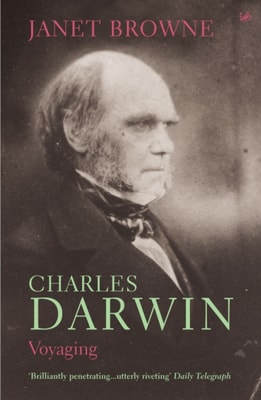
Few lives of great men offer so much interest - and so many mysteries - as the life of Charles Darwin, the greatest figure of nineteenth-century science, whose ideas are still inspiring discoveries and controversies more than 100 years after his death.
This concluding volume of Janet Browne's biography covers the transformation in Darwin's life after the first unexpected announcement of the theory of evolution by natural selection and the publication of On the Origin of Species in 1859.
Part of the new Ladybird Expert series, Evolution is a clear, simple and entertaining introduction to Charles Darwin's pioneering and revolutionary theory of how all life changes through natural selection.
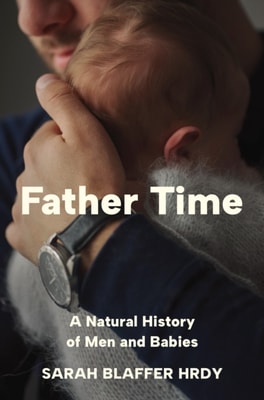
A sweeping account of male nurturing, explaining how and why men are biologically transformed when they care for babies It has long seemed self-evident that women care for babies and men do other things.
Why size plays such a big role in the living worldJohn Tyler Bonner, one of our most distinguished and creative biologists, here offers a completely new perspective on the role of size in biology.
It has been nearly 150 years since Darwin published On the Origin of Species, and his theory of natural selection still ignites a forest of heated debate between scientific fundamentalists on the one hand and religious fundamentalists on the other.
What have we learnt about the Nile since the mid-1970s, the moment when Julian Rzoska decided that the time had come to publish a comprehensive volume about the biology, and the geological and cultural history of that great river?
Synthesizing the findings from a wide range of disciplines - from biology and anthropology to philosophy and linguistics - the emerging field of Biosemiotics explores the highly complex phenomenon of sign processing in living systems.
Fitness and adaptation are fundamental characteristics of plant and animal species, enabling them to survive in their environment and to adapt to the inevitable changes in this environment.
Knowledge of downy mildew pathogens and diseases has increased significantly in taxonomy, phylogeny, genetics, molecular biology, host-parasite interactions, ecology, epidemiology and control.
distances between groups of ciliates were as vast as significant hurdles to obtain copyright permissions the genetic distances between plants and animals for the over 1,000 required illustrations, and I put - THE major eukaryotic kingdoms at that time!
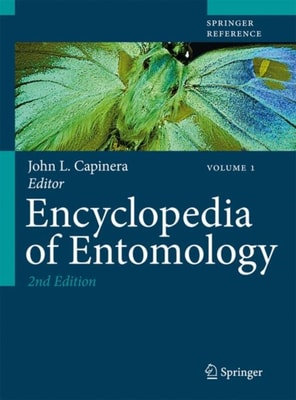
The Encyclopedia of Entomology brings together the expertise of more than 450 distinguished entomologists from 40 countries to provide a worldwide overview of insects and their close relatives.
Building on a range of disciplines - from biology and anthropology to philosophy and linguistics - this book draws on the expertise of leading names in the study of organic, mental and cultural codes brought together by the emerging discipline of biosemiotics.
Gregory Bateson's contribution to 20th century thinking has appealed to scholars from a wide range of fields dealing in one way or another with aspects of communication and epistemology.
This is a comprehensive overview of the basics of fuzzy control, which also brings together some recent research results in soft computing, in particular fuzzy logic using genetic algorithms and neural networks.
I had taught courses in applied ecology, population dynamics, and population management for many years and, like many of my colleagues, had grown acc- tomed to the blank stares of my students as we wove our way through the confused semantics and intricate concepts of traditional ecology and wrestled with elaborate mathematical arguments.