El momento de la Antigüedad tardía en el que Ireneo escribió su monumental tratado anti-gnóstico constituye un período privilegiado para el investigador de la historia y de la fenomenología de la religión.
El año 2019 le brindó a la Universidad Católica de Santa Fe la oportunidad de hospedar a los adherentes al Personalismo como así también a todo universitario interesado en hacer de la Persona el centro significante de sus actos habituales.
Por el vasto, vastísimo alcance de los pensamientos formulados por Heidegger en este texto crucial de la Modernidad radical (Moderne), aparecido en la estela de la Segunda Guerra Mundial; por la fuerza con que ahonda en su visión de una historia que no es sino la de la metafísica y en la necesidad de preparar un nuevo comienzo para el pensar, atento menos a la literatura que al "cuidado de la letra"; por la tajante claridad con que señala los límites del existencialismo francés (Sartre) y la vanidad de toda ética pretendidamente autárquica; y no en último lugar, por la concentración ejemplar con que el autor conduce de principio a cabo su discurso; por todas estas razones, la "Carta sobre el Humanismo" merece ser leída con la atenta solicitud que reclama un diálogo platónico y a la vez con la circunspección y la delicadeza con que debemos acercarnos a un texto poético.
The Accidental Universe and Other Stories begins with a riff on the oldest tale known to man and then takes us from the beginning of the twentieth century up to the present day and beyond.
In this book, German philosopher Julian Nida-Rumelin presents a theory of practical reason that is objectivist, or rather realist, as an alternative to the widespread subjectivism in the theory of rationality.
This volume sheds light on the affective dimensions of self-knowledge and the roles that emotions and other affective states play in promoting or obstructing our knowledge of ourselves.
This volume sheds light on the affective dimensions of self-knowledge and the roles that emotions and other affective states play in promoting or obstructing our knowledge of ourselves.
A culturally sensitive and rewarding new understanding of the cross-cultural interaction between China and EuropeIn this important new work author Yu Liu argues that, confined by a narrow English and European conceptual framework, scholars have so far obscured the radical innovation and revolutionary implication of Samuel Taylor Coleridge and William Wordsworth's monistic philosophy.
Dieses eBook: "Der Aufbau der menschlichen Person" ist mit einem detaillierten und dynamischen Inhaltsverzeichnis versehen und wurde sorgfältig korrekturgelesen.
Der erste Band der »Philosophischen Schriften« enthält die Kategorien, die Einführung in die Kategorien (Isagoge) von Porphyrios, die Hermeneutik (De interpretatione), die Erste Analytik und die Zweite Analytik und damit, zusammen mit der Topik und den Sophistischen Widerlegungen (Band 2), die Grundkonzepte der Aristotelischen Logik und Wissenschaftstheorie.
Conversar, dialogar, platicar, aunque sea de manera "ficticia", sobre temas de corte filosófico vinculados a la pasión resulta formativo para la propia filosofía y quienes la practican.
Actualmente, el medio-ambiente, el medio-cultural o las new media abarcan nuevas cuestiones y nuevos desafíos a la humanidad, especialmente en el ámbito de un Occidente moribundo y de sus antiguas colonias.
La filosofía no ha dejado de plantearse, fundamentalmente desde el siglo XX, el problema de cómo pensar la irrupción de la novedad, la posibilidad de crear o de inventar una nueva forma de pensamiento.
"La prioridad de la democracia sobre la filosofía" implica una comunidad liberal que ofrece a sus ciudadanos todo el espacio posible para que desarrollen sus proyectos privados.
A partir de las raíces fenomenológicas que introdujeron en esta corriente filosófica el problema del cuerpo y la constitución del mundo, el autor se aboca al estudio de lo que fuera la tesis doctoral de Ricoeur (Filosofía de la voluntad I), y sus primeras consideraciones sobre la relación entre carne y conciencia.
This volume offers a wide-ranging study on perception in the Timaeus, not only discussing senses such as touch, taste, and olfaction alongside audition and vision but also engaging with Timaeus' wider cosmological project.
This volume offers a wide-ranging study on perception in the Timaeus, not only discussing senses such as touch, taste, and olfaction alongside audition and vision but also engaging with Timaeus' wider cosmological project.
Max van Manen offers an extensively updated edition of Phenomenology of Practice: Meaning-Giving Methods in Phenomenological Research and Writing to provide an eloquent, accessible, and detailed approach to practicing phenomenology.
Max van Manen offers an extensively updated edition of Phenomenology of Practice: Meaning-Giving Methods in Phenomenological Research and Writing to provide an eloquent, accessible, and detailed approach to practicing phenomenology.
This collection of essays focuses on the reception of Plato and Greek political thought in the work of some major (pre)Victorian classical scholars and expands on a remarkable range of hotly debated issues on the interpretation of Greek antiquity.
This collection of essays focuses on the reception of Plato and Greek political thought in the work of some major (pre)Victorian classical scholars and expands on a remarkable range of hotly debated issues on the interpretation of Greek antiquity.
Perspectives in Criticism offers a comprehensive exploration of the philosophy of literary criticism, providing a framework for understanding the relationship between critical analysis and value evaluation.
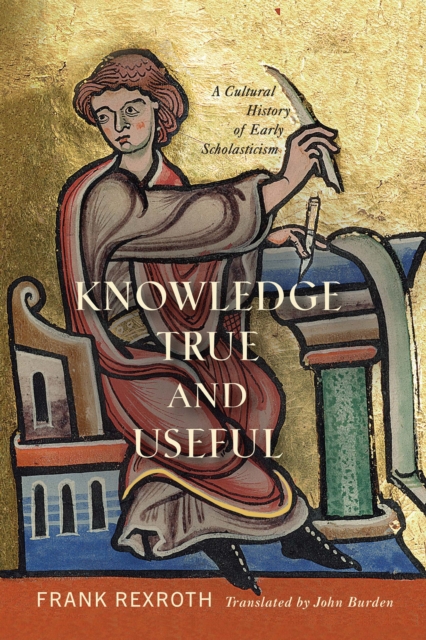
A radical shift took place in medieval Europe that still shapes contemporary intellectual life: freeing themselves from the fixed beliefs of the past, scholars began to determine and pursue their own avenues of academic inquiry.