The book analyzes worldwide changes in school organization and the teaching profession, and how the profession has been impacted by education policies that promote assessments and accountability.
This book introduces Chinese educational reforms and developments rolled out in the year 2014, examining them from both macro and micro perspectives and pursuing a mixed-methods approach.
This volume addresses both 'evidence of impact' and 'impact of evidence' to reveal the complex dialogue between the enterprise of teacher education and evidence of its effects in the early 21st century, taking a critical position on the very notions of 'evidence' and 'impact' that underpin contemporary policy frameworks.
The book presents the possibilities and realities of virtual worlds in education through the application of 3D virtual worlds to support authentic learning, creativity, learner engagement and cultural diversity in higher education.
In a frank contemplation as she nears the end of her shortened course of life, educator Sie Siok Hui reveals moments of epiphany while honing her craft and examines critical factors in the curriculum design process.
In this edited collection, the authors pick up the communities of practice (CoP) approach of sharing practice in their reflection on the experience of taking their CoP vision from a dream to reality.
This book is a collected volume that brings together research from authors working in cross-disciplinary academic areas including early childhood, linguistics and education, and draws on the shared interests of the authors, namely understanding children's interactions and the co-production of knowledge in everyday communication.
This book is a direct and empirical response to the mounting official interest in citizenship education, increasing dynamics between state and society, and growing citizenship awareness and practice in society in contemporary China.
This book provides an up-to-date account of relevant early childhood policy and practice in five Chinese societies: the People's Republic of China or Mainland China, Hong Kong, Macao, Singapore, and Taiwan.
This book offers essential insights into Chinese Korean minority youth citizenship identity development during their high school and university education period out of their political socialization experience.
Given the increasing speed of change and the information explosion around the world, this book draws attention to the practice of teaching for conceptual understanding, which has been heralded as an effective approach within many curriculum frameworks.
This book gathers a range of contributions from researchers and practitioners across borders with an emphasis on theoretical arguments and empirical data concerning teacher empowerment.
Considering the evolution of Indian higher education policy from British colonial rule to modern day India, this pivot examines key policy issues in fields as diverse as language, nationalism and economic development.
This book advocates for a radical change in music teaching and learning methods, allowing for a break from the traditional conservatory model still in use in many classrooms.
This comparative study provides an overview of the textbook production chain, starting with its origins in the curriculum, and suggests ways in which policymakers can make improvements at every point in the chain.
This book explores contemporary perspectives and research on inclusion, providing a platform for discussing inclusion at an international level and its intersections with belonging and equity.
This book investigates the higher education system in Germany and China, and analyzes the differences between academic higher education and application-oriented higher education.
This book stems from the 2019 meeting of the UNESCO UNITWIN international network for Arts Education Research for Cultural Diversity and Sustainable Development.
This book examines current context-specific trends and developments in empirical research on arts education and arts in education, in order to evaluate and create responsive approaches to future global challenges.
This book discusses the perspectives and practices of teacher education programs in order to shed new light on the national priorities, policies, curriculum inputs, delivery mechanisms, challenges and future trends in 20 selected countries.
This book offers unique insights into elite Nigerian parents' engagement with, and use of, the international secondary education market as they attempt to retain their social standing - via their children - under today's shifting global conditions.
This book examines the globalization trends in higher education from an international political science perspective, using Nye's theory of soft power to explore the rationale behind it.
This book provides an overview of the evolution of education in the United Arab Emirates from its humble beginnings in palm frond huts, to today's proliferation of prestigious international schools and global university branch campuses.
This book shares the experiences of the Monash University and La Trobe University libraries in Melbourne, Australia, regarding the paths taken to transform and reposition these libraries within their institutions.
This book urges readers to develop a radical capacity to unthink and rethink interculturality, through multiple, pluri-perspectival and honest dialogues between the authors, and their students.
This book examines the quality assessment movement in academic scholarship, as globalization prompts a search for global measures of university services and output.
This book examines socioeconomic inequality and student outcomes across various Western industrialized nations and the varying success they have had in addressing achievement gaps in lower socioeconomic status student populations.
This book is a unique and original contribution to the knowledge of transcultural engagement between the 'East' and the 'West'; notably between China and Australia.
This book documents experimentation with various policy and governance approaches that produce structural differences in the composition and organisation of Asia's higher education systems.
Although both school-university transitions and cross-border transitions have been widely explored, comparatively little research has been conducted on those students who undergo both transitions at the same time.
This book reports on studies contextualised within the curriculum development of General Studies in primary education and Liberal Studies in secondary education in Hong Kong.
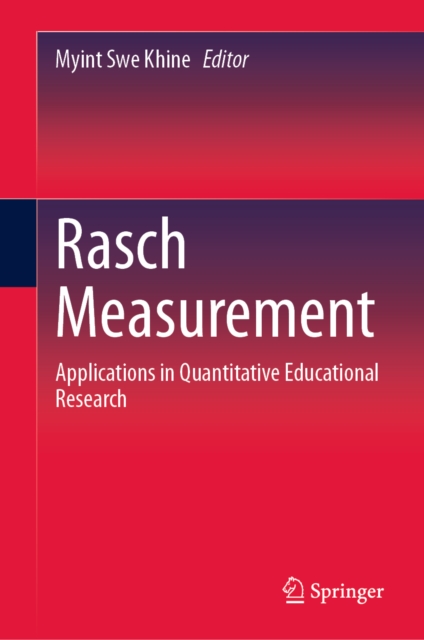
This book focuses on the use of the Rasch measurement model in validation studies and in analyzing the psychometric properties of a variety of test instruments, questionnaires, and scales in international contexts.
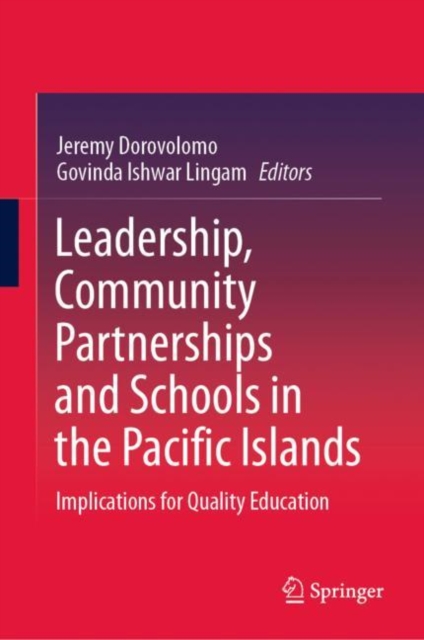
This book explores a range of educational issues in the Pacific Islands, from school leadership in various contexts to the importance of forging cordial school and community partnerships.
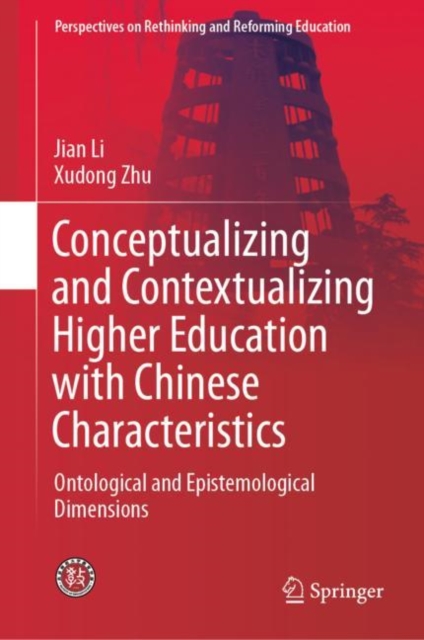
This book provides a fresh and unique overview of the modernization and internationalization of Chinese higher education, focusing on Chinese higher education from 1949 to 2018.
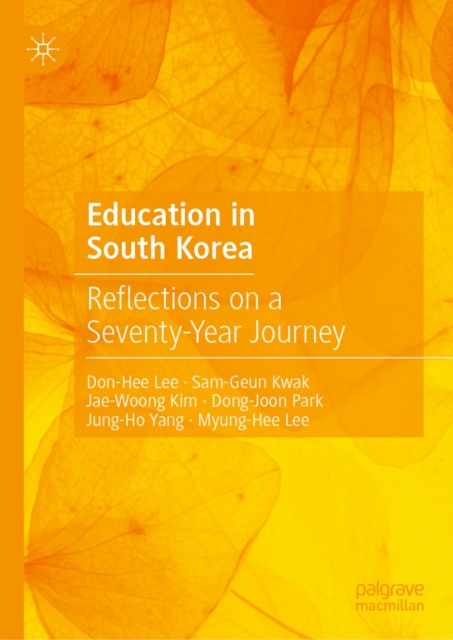
This book, the result of a landmark colloquium held in Korea to reflect on the role of education in Korean society, provides fascinating insights into the interplay of political evolution and pedagogy.
This book provides a framework for investigating faculty development in the Chinese higher education system, and proposes a faculty development model, which is subsequently applied to assess the conceptual, practical and strategic dimensions of Chinese faculty development.
This book explores how higher education and sustainability interact in New Zealand, and argues that higher education at present may be contributing as much to unsustainability as it does to sustainability.