Studienarbeit aus dem Jahr 2022 im Fachbereich Didaktik - Sport, Sportpädagogik, Pädagogische Hochschule Heidelberg (Sportwissenschaft), Veranstaltung: Sportartübergreifende Vermittlung und Realisierung, Sprache: Deutsch, Abstract: Bei der Planung, Durchführung und Auswertung des Sportunterrichts sollten im Sinne der Erziehung zum Sport die verschiedenen Bedürfnisse und Voraussetzungen der Schüler:innen berücksichtigt werden.
Fachbuch aus dem Jahr 2022 im Fachbereich Didaktik für das Fach Deutsch - Deutsch als Zweitsprache, DaZ, Note: 1, , Sprache: Deutsch, Abstract: Portfolio für DaZ Lehrkräfte mit Textanalyse, Projektplanung, Lektionsanalyse und Unterrichtsplanung zum Thema "Körperteile benennen und über das Befinden sprechen".
Examensarbeit aus dem Jahr 2022 im Fachbereich Didaktik - Ethik, Note: 1,3, Philipps-Universität Marburg, Sprache: Deutsch, Abstract: Inwiefern eignet sich Erich Fromms Entwurf einer humanistischen Ethik für den Ethikunterricht der Sekundarstufe II?
Unterrichtsentwurf aus dem Jahr 2022 im Fachbereich Didaktik - Mathematik, Note: 1,7, Studienseminar Bernau, Veranstaltung: Fachseminar Mathematik Primarstufe, Sprache: Deutsch, Abstract: Die vorliegende Arbeit umfasst die schriftliche Unterrichtsplanung zur Unterrichtsprobe im Fach Mathematik (Klasse 5) zur Erlangung des Lehramtes für die Primarstufe am Studienseminar Bernau (2022).
Masterarbeit aus dem Jahr 2022 im Fachbereich Pädagogik - Sozialpädagogik, Note: 2,3, Universität Trier, Sprache: Deutsch, Abstract: Im Rahmen der Masterarbeit wird zum einen durch einen theoretischen Teil an die Aufgaben der Sozialen Arbeit herangeführt und zum anderen entsprechend das Triple Mandat sowie die Lebensweltorientierung der Sozialen Arbeit aufgezeigt.
Studienarbeit aus dem Jahr 2022 im Fachbereich Didaktik - Mathematik, Note: 2,7, , Sprache: Deutsch, Abstract: In dieser Arbeit wird auf den Mathematikunterricht der Grundschule eingegangen und versucht, die Frage, wie Schüler*innen mit Dyskalkulie im Sinne der Inklusion im Mathematikunterricht der Grundschule innerhalb einer Lernumgebung bestmöglich gefördert werden können, zu beantworten.
Masterarbeit aus dem Jahr 2021 im Fachbereich Pädagogik - Sozialpädagogik, Note: 1,5, Technische Universität Chemnitz, Sprache: Deutsch, Abstract: Diese Arbeit beschäftigt sich mit der Partizipation in der Offenen Kinder- und Jugendarbeit in ausgewählten Freizeiteinrichtungen in Sachsen anhand von Experteninterviews.
Studienarbeit aus dem Jahr 2022 im Fachbereich Pädagogik - Kunstpädagogik, Note: 1,1, Ludwig-Maximilians-Universität München (Fakultät für Geschichts- und Kunstwissenschaften Department Kunstwissenschaften), Veranstaltung: Seminar, Sprache: Deutsch, Abstract: Ziel der vorliegenden Arbeit ist die Beantwortung der Frage: Wie kann Kunsttherapie bei Trauer ein hilfreiches Mittel zur Wiederherstellung eines ausgewogenen psychisch-seelischen Zustandes sein?
Studienarbeit aus dem Jahr 2021 im Fachbereich Didaktik - Mathematik, Note: 1,0, Gottfried Wilhelm Leibniz Universität Hannover, Sprache: Deutsch, Abstract: Im Rahmen dieser Hausarbeit soll die Frage beantwortet werden, wie der Sachverhalt der Identität von 0,999.
Studienarbeit aus dem Jahr 2022 im Fachbereich Pädagogik - Kunstpädagogik, Note: 1,3, Universität Koblenz-Landau, Sprache: Deutsch, Abstract: Diese Hausarbeit behandelt die Bedeutung von kreativem Handeln und kreativen Prozessen im Hinblick auf die (ästhetische) Bildung.
Forschungsarbeit aus dem Jahr 2023 im Fachbereich Didaktik für das Fach Deutsch - Deutsch als Fremdsprache, DaF, Université Djillali Liabes, Sprache: Deutsch, Abstract: Die Bedeutung und der Stellenwert des didaktischen Diktats wurden von vielen Didaktiker:innen und Expert:innen im algerischen DaF-Unterricht diskutiert.
Projektarbeit aus dem Jahr 2023 im Fachbereich Didaktik für das Fach Deutsch - Deutsch als Zweitsprache, DaZ, Ruhr-Universität Bochum, Veranstaltung: Weiterbildung für DaZ, Sprache: Deutsch, Abstract: Wie kann ich mit Schülern mit Deutsch als Zweitsprache in den Regelklassen umgehen?
Fachbuch aus dem Jahr 2021 im Fachbereich Pädagogik - Inklusion, Note: 1,0, , Veranstaltung: Theorien und Modelle der Didaktik, Sprache: Deutsch, Abstract: Die Arbeit beschäftigt sich mit der Bedeutung von Inklusion sowie Chancen und Grenzen der inklusiven Didaktik.
Studienarbeit aus dem Jahr 2022 im Fachbereich AdA Gesundheit / Medizin / Sport / Soziales, Note: 1,7, Deutsche Hochschule für Prävention und Gesundheitsmanagement GmbH, Sprache: Deutsch, Abstract: Diese Arbeit befasst sich mit der Analyse der gesundheitlichen Ausgangssituation von Schülerinnen und Schülern in Setting Grundschule und Identifikation von praxistauglichen Handlungsansätzen zur Gesundheitsförderung.
Fachbuch aus dem Jahr 2021 im Fachbereich Didaktik für das Fach Deutsch - Deutsch als Fremdsprache, DaF, , Veranstaltung: Zusatzqualifizierung für Lehrkräfte in Berufssprachkursen nach § 18 Abs.
Studienarbeit aus dem Jahr 2021 im Fachbereich Pädagogik - Inklusion, Note: 1,5, Université du Luxembourg, Sprache: Deutsch, Abstract: Gegenstand dieser Arbeit ist die Analyse der Inklusion in Bezug auf Beeinträchtigung.
Unterrichtsentwurf aus dem Jahr 2022 im Fachbereich Didaktik - Lesen, Note: 1,3, Studienseminar Wunstorf, Sprache: Deutsch, Abstract: Dieser Unterrichtsentwurf widmet sich dem reziproken Lesen.
Studienarbeit aus dem Jahr 2021 im Fachbereich Pädagogik - Inklusion, Note: 1,3, Universität Augsburg (Philosophisch-Sozialwissenschaftliche Fakultät), Veranstaltung: Vertiefungsmodul 1, Sprache: Deutsch, Abstract: Die Arbeit beschäftigt sich mit der Herausforderung der Inklusion in Kindergärten und Waldorfkindergärten.
Zusammenfassung aus dem Jahr 2021 im Fachbereich Didaktik für das Fach Deutsch - Deutsch als Fremdsprache, DaF, Note: 2,7, Ludwig-Maximilians-Universität München, Sprache: Deutsch, Abstract: Niedlingers/Pasewalcks Ansicht über die Verwendung von Goethes Gedicht im DaF-Unterricht könnte unter „literarischen Aspekt der Sprache: […] Klang“ (vgl.
Studienarbeit aus dem Jahr 2021 im Fachbereich Pädagogik - Kunstpädagogik, Note: 1,3, Helmut-Schmidt-Universität - Universität der Bundeswehr Hamburg, Veranstaltung: Probleme und Epochen der Bildungsgeschichte: Einführung in die Geschichte(n) der ästhetischen Erziehung und Bildung ab dem 18.
Studienarbeit aus dem Jahr 2021 im Fachbereich Didaktik - Kunst, Note: 1,7, Universität Leipzig (Kunstpädagogik), Veranstaltung: Bildnerische Produktion und Rezeption, Sprache: Deutsch, Abstract: Ziel des vorliegenden Portfolios ist die Planung einer Unterrichtseinheit für eine dritte Klassenstufe der Grundschule, die sich mit dem ausgewählten Kunstwerk von Wolfgang Mattheuer, dem "Reichenbacher Herbstfenster", beschäftigt.
Studienarbeit aus dem Jahr 2021 im Fachbereich Didaktik für das Fach Deutsch - Deutsch als Zweitsprache, DaZ, Note: 2,0, Pädagogische Hochschule Ludwigsburg, Veranstaltung: Kleine Spiele - DaZ, Sprache: Deutsch, Abstract: Wie lässt sich Sportunterricht sprachsensibel gestalten?
Studienarbeit aus dem Jahr 2021 im Fachbereich Pädagogik - Sozialpädagogik, Note: 2,0, IBA Berlin: Internationale Berufsakademie der F+U Unternehmensgruppe gGmbH, Sprache: Deutsch, Abstract: In dieser Arbeit geht es um die schulische Förderung während der Coronaeinschränkungen.
Unterrichtsentwurf aus dem Jahr 2021 im Fachbereich Didaktik - Mathematik, Technische Universität Dortmund, Veranstaltung: Begleitseminar zum Berufsfeldpraktikum, Sprache: Deutsch, Abstract: Der Unterrichtsentwurf soll den Schüler:innen den mathematischen Begriff der Zuordnung näherbringen.
Unterrichtsentwurf aus dem Jahr 2021 im Fachbereich Didaktik - Mathematik, , Sprache: Deutsch, Abstract: Ziel der Stunde: Die Schülerinnen und Schüler finden möglichst alle Variationen der Streichsummenberechnung eines Streichquadrats, indem sie Strategien entwickeln und ihre Vorgehensweise beschreiben.
Studienarbeit aus dem Jahr 2021 im Fachbereich Pädagogik - Inklusion, Note: 2,0, , Veranstaltung: Quantitative Forschungsmethoden, Sprache: Deutsch, Abstract: Das Fallbeispiel „Schulische Inklusion in Beispielhausen“ beschreibt die Zunahme von Schülern mit SPF an Grundschulen und die einhergehende Abnahme der Anzahl der Schüler an Förderschulen.
Projektarbeit aus dem Jahr 2021 im Fachbereich Pädagogik - Integration, , Sprache: Deutsch, Abstract: Ziel dieses Projektes soll sein, dass Kinder die kulturelle Vielfalt ein Stück weit näher kennenlernen und ihre eigene Meinung über verschiedene, kulturelle Themen bilden.
Forschungsarbeit aus dem Jahr 2021 im Fachbereich Soziale Arbeit - Kinder- und Jugendhilfe, Note: 1,0, Internationale Berufsakademie der F+U Unternehmensgruppe Darmstadt, Sprache: Deutsch, Abstract: Für den Autor stellte sich die Frage, inwieweit das pädagogische Handeln Einfluss auf den künftigen Hilfeverlauf haben kann und wie pädagogische Teams mit bindungstraumatisierten Kindern und Jugendlichen professionell umgehen.
Studienarbeit aus dem Jahr 2021 im Fachbereich Pädagogik - Leseerziehung, Note: 3,0, Leuphana Universität Lüneburg, Sprache: Deutsch, Abstract: Diese Arbeit beschäftigt sich mit der Fragestellung, inwieweit die eigene Lesesozialisation vom Leseverhalten der Eltern in der Adoleszenz beeinflusst wird.
Bachelorarbeit aus dem Jahr 2021 im Fachbereich Didaktik - Sport, Sportpädagogik, Note: 1,7, Pädagogische Hochschule Karlsruhe (Bewegungserziehung und Sport), Sprache: Deutsch, Abstract: Die Arbeit befasst sich mit dem Thema Unterrichtsqualität im Sportunterricht sowie mit einer empirischen Untersuchung der Qualitätskriterien guten Sportunterrichts.
The Japanese Abacus & Theory book is easy to follow, and gives the reader step-by-step directions on how to use it correctly while applying it to practical use.
Studienarbeit aus dem Jahr 2020 im Fachbereich Didaktik für das Fach Deutsch - Deutsch als Fremdsprache, DaF, Note: 1,0, Universität Wien, Sprache: Deutsch, Abstract: Die vorliegende Arbeit geht der Frage nach, wie eine Materialerstellung einer Unterrichtseinheit in Deutsch als Fremdsprache (DaF) für eine fiktive Zielgruppe unter Berücksichtigung der angestrebten Kompetenzerweiterung erfolgen kann.
The Japanese Abacus & Theory book is easy to follow, and gives the reader step-by-step directions on how to use it correctly while applying it to practical use.
Studienarbeit aus dem Jahr 2021 im Fachbereich Didaktik - Ethik, Note: 2,3, Universität Konstanz, Sprache: Deutsch, Abstract: Diese Arbeit beschäftigt sich mit Rolf Sistermanns "Bonbon-Modell" anhand einer möglichen Unterrichtskonzeption zur Thematik Tierethik.
Übungsmaterial für Lehrer und Lehrerinnen an Grundschulen, Fach: Deutsch, Klasse 2–4 +++Kreative Maldiktate zur Förderung des aufmerksamen Zuhörens – mit diesen abwechslungsreichen Unterrichtsideen trainieren Kinder der Klassen 2–4 das Hörverstehen und erweitern gestalterisch ihren Wortschatz.
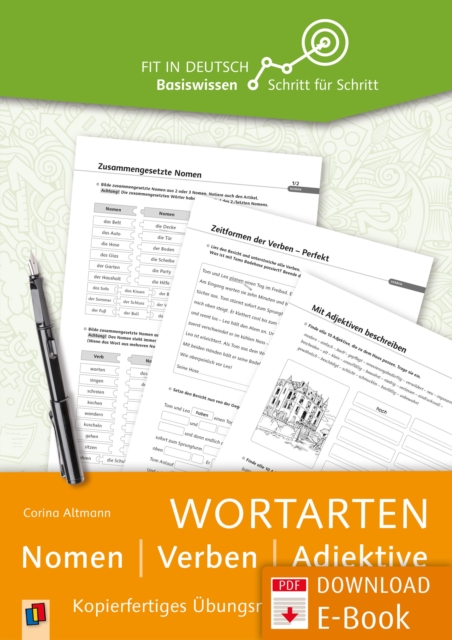
Unterrichtsmaterial (Kopiervorlagen) für Lehrer und Lehrerinnen an weiterführenden Schulen im Fach Deutsch, Klasse 5–9 +++Basiswissen Grammatik Schritt für Schritt – das sind kleinschrittige Arbeitsblätter, die Schülern und Schülerinnen helfen, bestehende Lücken im Bereich der Wortarten Nomen, Verben und Adjektive effektiv zu schließen oder das Themenfeld begleitend zum Unterricht zu üben.