This book discusses the features of the environmental policies and procedures that should exist at the plant level and thus helps utility, petrochemical, chemical, pharmaceutical, and other manufacturing industries benefit technically and economically by implementing these feature.
This book contains detailed and structured approaches to tackling practical decision-making troubles using economic consideration and analytical methods in Municipal solid waste (MSW) management.
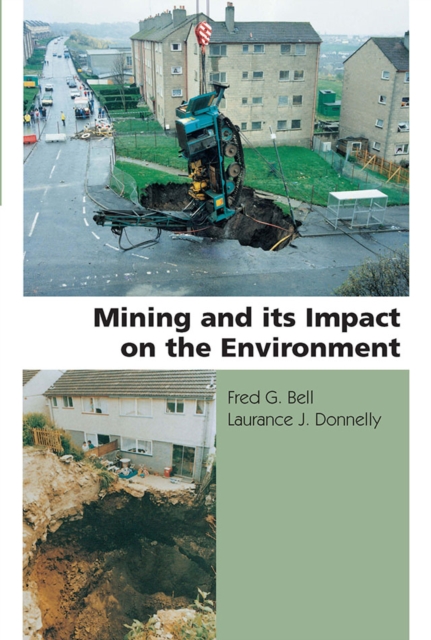
Sustainable practices within the mining and energy sectors are assuming greater significance due to uncertainty and change within the global economy and safety, security, and health concerns.
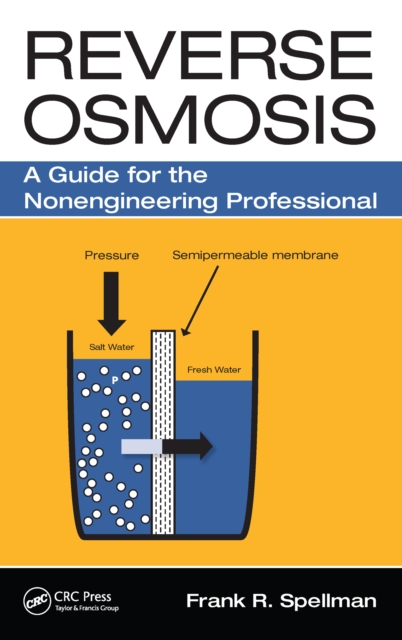
For the Nonengineering ProfessionalPerfect for anyone without a background in science or engineering who wants to take a closer look at how water is processed and treated, Reverse Osmosis: A Guide for the Nonengineering Professional relates reverse osmosis in its most basic form and addresses growing concerns about the quality of tap water.
Issues in Underground Storage Tank Management presents a comprehensive description of the many complex facets of hazardous waste management, tank closure, and site assessment.
Addresses a Global Challenge to Sustainable DevelopmentAdvances in Biodegradation and Bioremediation of Industrial Waste examines and compiles the latest information on the industrial waste biodegradation process and provides a comprehensive review.
This book represents the efforts of over a hundred individuals who planned and executed the NSTS field experiments, analyzed the billions of data points, and distilled their findings and insights into the summaries found here.
This monograph consists of manuscripts submitted by invited speakers who participated in the symposium "e;Industrial Environmental Chemistry: Waste Minimization in Industrial Processes and Remediation of Hazardous Waste,"e; held March 24-26, 1992, at Texas A&M University.
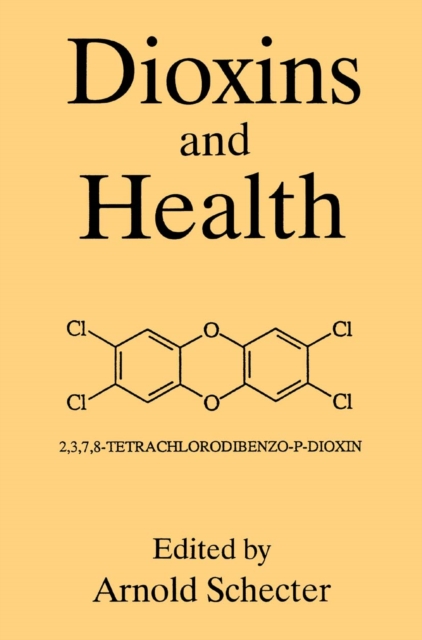
This book originated in a series of cross-disciplinary conversations in the years 1984-1990 between the editor, who is a physician-researcher involved in clinical and laboratory research, and a dioxin toxicologist.
Non-Waste Technology and Production covers the proceedings of an international seminar organized by the Senior Advisers to ECE Governments on Environmental Problems on the Principles and Creation of Non-Waste Technology and Production, held in Paris on November 29 - December 4, 1976.
In a simple, straightforward manner, this book presents most of the major process units for wastewater treatment, addressing what the unit is and how it basically works.
This book discusses petroleum spill bioremediation, the use of spectroscopy to identify microbial metabolic pathways, the detoxification of mercury by using recombinant mercury-resistant bacteria, and the use of manganese-oxidizing bacteria for bioremediation.
This new edition of Microbiology for Water and Wastewater Operators emphasizes the new world order of water control based on microbiological principles and practices.
This book focuses on the impact of waste disposal to land, providing an outline of the underpinning knowledge of processes associated with contaminant sorption, transport, and plant uptake.
The protection of groundwater and surface water from contamination by the escape of contaminant from waste disposal is now an important consideration in many countries of the world.
This book is a state-of-the-art report which documents current knowledge on the properties of fly ash in concrete and the use of fly ash in construction.
Certain wastes such as nuclear wastes, are so hazardous that their disposal creates a major challenge requiring considerable technical skill and understanding.
Grasp the Essential Principles of Membrane Bioreactor ProcessesEvolved from the conventional activated sludge (CAS) process, membrane bioreactor (MBR) processes have become the next-generation solution for municipal and industrial wastewater treatment and recycle.
Polycyclic Aromatic Hydrocarbons (PAHs) are a group of semi-volatile organic compounds that are formed during the incomplete burning of gas, coal, oil, wood, garbage, or other organic substances.
Encompassing high priority research areas such as bioenergy production, global warming mitigation, and sustainable agriculture, biochar has received increased worldwide interest in the past decade.
Disposal and Management of Solid Waste: Pathogens and Diseases takes a closer look at pathogens that are found in solid wastes and the diseases that they produce.
Recycling of materials in building and infrastructure applications are global concerns driven by natural resource preservation needs of modernized countries and sustainable development of emerging countries.
Once again the present volume contains the majority of the papers presented at the Third Pan-American Biodeterioration Society Meeting held at The George Washington University, Washington, D.