The Microbiological Quality of Food: Foodborne Spoilers specifically addresses the role of spoilers in food technology and how they affect the quality of food.
Advances in Food Rheology and Its Applications presents the latest advances in the measurement and application of food rheology, one of the most important tools for food companies when characterizing ingredients and final products, and a predictor of product performance and consumer acceptance.
Multisensory Flavor Perception: From Fundamental Neuroscience Through to the Marketplace provides state-of-the-art coverage of the latest insights from the rapidly-expanding world of multisensory flavor research.
Covering all aspects of sensory panel management, this volume describes the different types of sensory panels (for example panels for quality control, descriptive analysis and discrimination tests), discusses the issues involved with sensory testing, and gives detailed information about sensory panel recruitment, training and on-going management.
Non-equilibrium States and Glass Transitions in Foods: Processing Effects and Product Specific Implications presents the tactics needed to understand and control non-equilibrium states and glass transitions in food, an essential element in maintaining the shelf-life and quality of foods.
Food Structure and Functionality helps users further understand the latest research related to food structuring and de-structuring, with an emphasis on structuring to achieve improved texture, taste perception, health and shelf-stability.
Advances in Food Traceability Techniques and Technologies: Improving Quality Throughout the Food Chain covers in detail a topic of great importance to both the food industry which is obliged to provide clear and accurate labeling of their products and the government and other organizations which are tasked with verification of claims of food quality and safety.
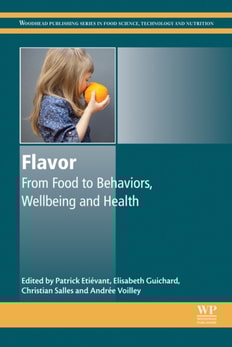
Flavor: From Food to Behaviors, Wellbeing and Health is the first single-volume resource focused on the different mechanisms of flavor perception from food ingestion, to sensory image integration and the physiological effects that may explain food behaviors.
Innovative Food Processing Technologies: Extraction, Separation, Component Modification and Process Intensification focuses on advances in new and novel non-thermal processing technologies which allow food producers to modify and process food with minimal damage to the foodstuffs.
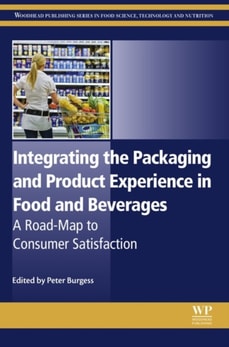
Integrating the Packaging and Product Experience in Food and Beverages: A Road-Map to Consumer Satisfaction focuses on the interrelationship between packaging and the product experience.
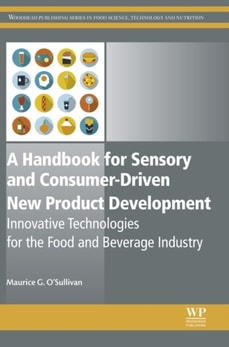
A Handbook for Sensory and Consumer Driven New Product Development explores traditional and well established sensory methods (difference, descriptive and affective) as well as taking a novel approach to product development and the use of new methods and recent innovations.
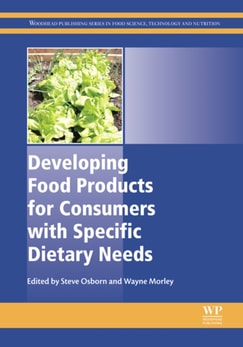
Developing Food Products for Customers with Specific Dietary Needs explains the process for developing foods for customers who have specific dietary needs, further shining a light on the number of increasing medical conditions related to food intake that have emerged in the past few decades.
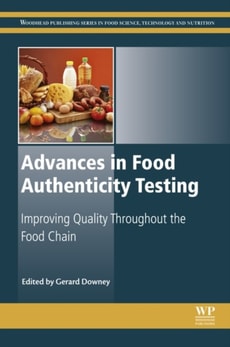
Advances in Food Authenticity Testing covers a topic that is of great importance to both the food industry whose responsibility it is to provide clear and accurate labeling of their products and maintain food safety and the government agencies and organizations that are tasked with the verification of claims of food authenticity.
Handbook of Hygiene Control in the Food Industry, Second Edition, continues to be an authoritative reference for anyone who needs hands-on practical information to improve best practices in food safety and quality.
Environmental and consumer activists have for a long time blamed pesticides, fertilizers and other aspects of intensive farming for causing environmental degradation and human disease.
Food Processing and Nutrition elucidates the relationship between food processing and nutrition, particularly, the properties of nutrients, effects of different processes, commodities, and the addition of nutrients.
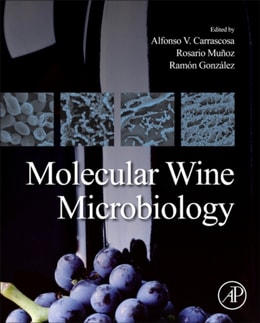
Molecular Wine Microbiology features rigorous scientific content written at a level comprehensible for wine professionals as well as advanced students.
Bioactive Foods in Promoting Health: Probiotics and Prebiotics brings together experts working on the different aspects of supplementation, foods, and bacterial preparations, in health promotion and disease prevention, to provide current scientific information, as well as providing a framework upon which to build clinical disease treatment studies.
This fourth edition brings together a diverse range of experts in nutrition-related areas to discuss recent thinking and discoveries in nutrition, especially in relation to topics that have the greatest capacity to improve human health and nutritional implementation.
This book creates a multidisciplinary forum of discussion on Ficus carica with particular emphasis on its horticulture, post-harvest, marketability, phytochemistry, extraction protocols, biochemistry, nutritional value, functionality, health-promoting properties, ethnomedicinal applications, technology and processing.
The third edition of this long-serving successful reference work is a 'must-have' reference for anyone needing or desiring an understanding of the structure, chemistry, properties, production and uses of starches and their derivatives.
The area of food toxicology currently has a high profile of interest in the food industry, universities, and government agencies, and is certainly of great concern to consumers.
Producing and Consuming the Craft Beer Movement is an ethnographic analysis of the craft beer movement and its rapid development as an industry that articulated a different set of values: celebrating, quality, community, and good taste.
Advances in Food and Nutrition Research recognizes the integral relationship between the food and nutritional sciences and brings together outstanding and comprehensive reviews that highlight this relationship.
Advances in Food and Nutrition Research recognizes the integral relationship between the food and nutritional sciences and brings together outstanding and comprehensive reviews that highlight this relationship.
Advances in Food and Nutrition Research recognizes the integral relationship between the food and nutritional sciences and brings together outstanding and comprehensive reviews that highlight this relationship.
Advances in Food and Nutrition Research recognizes the integral relationship between the food and nutritional sciences and brings together outstanding and comprehensive reviews that highlight this relationship.
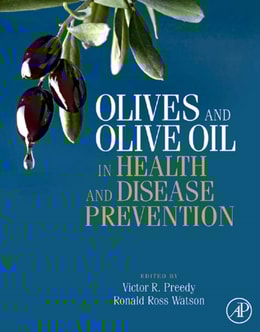
Long used in sacred ceremonies and associated with good health, the nutritional and health promoting benefits of olives and olive oils have been proven by an ever-increasing body of science.
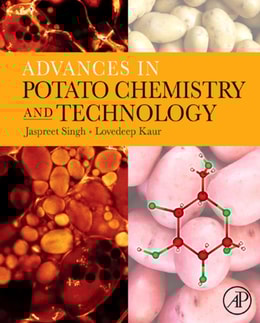
Developments in potato chemistry, including identification and use of the functional components of potatoes, genetic improvements and modifications that increase their suitability for food and non-food applications, the use of starch chemistry in non-food industry and methods of sensory and objective measurement have led to new and important uses for this crop.
Advances in Food and Nutrition Research recognizes the integral relationship between the food and nutritional sciences and brings together outstanding and comprehensive reviews that highlight this relationship.
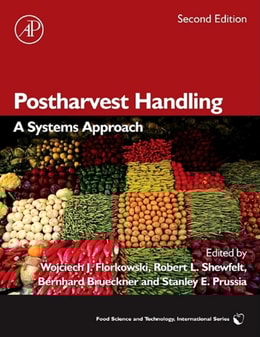
Consideration of the interactions between decisions made at one point in the supply chain and its effects on the subsequent stages is the core concept of a systems approach.
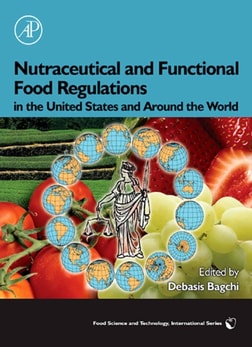
Globalization of the nutraceutical and functional food industries presents significant challenges, not the least of which is the regulatory variance between countries active in the marketplace.