Oral lipid-based formulations are attracting considerable attention due to their capacity to facilitate gastrointestinal absorption and reduce or eliminate the effect of food on the absorption of poorly water-soluble, lipophilic drugs.
The applications of solvent extraction (SX) and liquid membranes (LM) span chemistry, metallurgy, hydrometallurgy, chemical/mineral processing, and waste treatment-making it difficult to find a single resource that encompasses fundamentals as well as advanced applications.
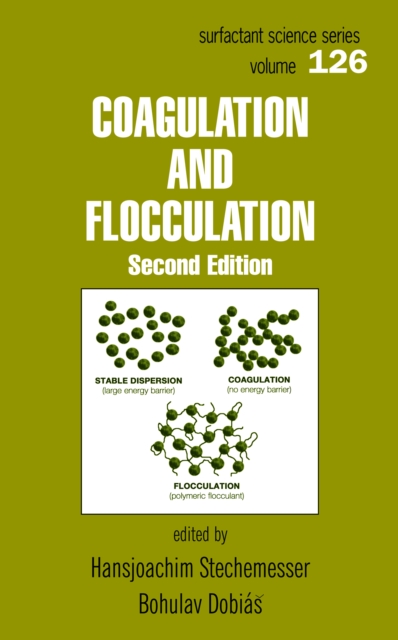
First published in 1993, Coagulation and Flocculation is a practical reference for the researchers in the field of the stabilization and destabilization of fine solid dispersions.
Wood adhesives are of tremendous industrial importance, as more than two-thirds of wood products in the world today are completely or partially bonded together using a variety of adhesives.
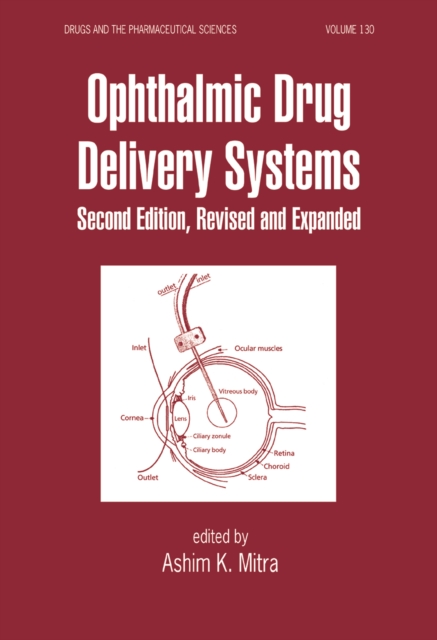
The second edition of this text assembles significant ophthalmic advances and encompasses breakthroughs in gene therapy, ocular microdialysis, vitreous drug disposition modelling, and receptor/transporter targeted drug delivery.
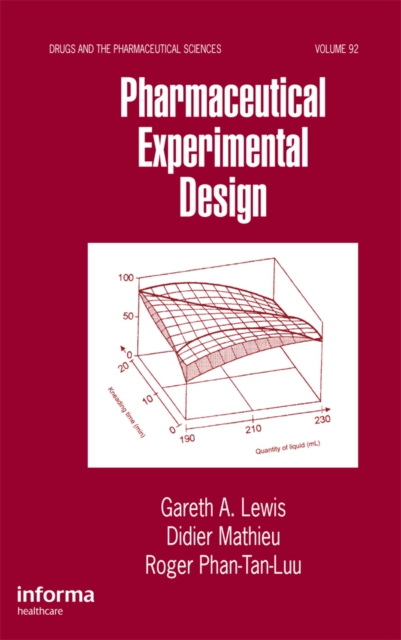
This useful reference describes the statistical planning and design of pharmaceutical experiments, covering all stages in the development process-including preformulation, formulation, process study and optimization, scale-up, and robust process and formulation development.
A fresh view of the state-of-the-art, Advances in Food Extrusion Technology focuses on extruder selection, extrudate development, quality parameters, and troubleshooting in the 21st century extrusion process.
Covers a Host of Groundbreaking TechniquesThermal processing is known to effectively control microbial populations in food, but the procedure also has a downsideit can break down the biochemical composition of foods, resulting in a marked loss of sensory and nutritional quality.
As a result of their unique physical properties, biological membrane mimetics, such as liposomes, are used in a broad range of scientific and technological applications.
This volume provides a comprehensive introduction to methods and procedures related to the preparation, characterization, and main result interpretations of methods used for studying molecular interactions in Food Science.
This unique textbook takes a holistic approach to food poisoning and food hygiene, explaining in clear and non-technical language the causes of food poisoning with practical examples from 'real-life' outbreaks.
This volume provides a comprehensive introduction to methods and procedures related to the preparation, characterization, and main result interpretations of methods used for studying molecular interactions in Food Science.
Many believe that the silicon/information age is heading to the Age of Biology and that the next frontier in ceramics will most likely require molecular level or nanoscale control.
Controlling, measuring, and "e;designing"e; the color of food are critical concerns in the food industry, as the appeal of food is chiefly determined visually, with color the most salient visual aspect.
In contrast to traditional combustion, gasification technologies offer the potential for converting coal and low or negative-value feedstocks, such as petroleum coke and various waste materials into usable energy sources or chemicals.
With chapters by the editors and other experts in the field of polymer science, this book covers a broad selection of important research advances in the field, including updates on enzymatic destruction and photoelectric characteristics, studies on the changes in the polymer molecular mass during hydrolysis and a new type of bioadditive for motor f
Processing Foods: Quality Optimization and Process Assessment provides a large body of updated information - helping researchers and industrialists make use of new concepts, technologies and approaches that are at the heart of modern food research.
Written to meet the requirements of engineers working in construction and concrete manufacturing, Mineral Admixtures in Cement and Concrete focuses on how to make more workable and durable concrete using mineral admixtures.
With over 100 illustrations, Volume 1 addresses the core disciplines of pharmaceutics (absorption, PK, excipients, tablet dosage forms, and packaging), and explores the challenges and paradigms of pharmaceutics.
The Third Edition of Ceramic Materials for Electronics studies a wide range of ceramic materials, including insulators, conductors, piezoelectrics, and ferroelectrics, through detailed discussion of their properties, characterization, fabrication, and applications in electronics.
Spanning every critical element of validation for any pharmaceutical, diagnostic, medical device or equipment, and biotech product, this Second Edition guides readers through each step in the correct execution of validating processes required for non-aseptic and aseptic pharmaceutical production.
This book provides a sampler of developments in separation and purification technology, focusing on the application of membrane-based separations in biotechnology, commercial applications of emulsion liquid membranes, and economic evaluation of membrane technology.
The second edition of a bestseller, Functional Food Ingredients and Nutraceuticals: Processing Technologies covers new and innovative technologies for the processing of functional foods and nutraceuticals that show potential for academic use and broad industrial applications.
Nanocomposite Membrane Technology: Fundamentals and Applications is the first book to deliver an extensive exploration of nanocomposite membrane technology.
This volume chronicles the proceedings of the Third International Symposium on Contact Angle, Wettability and Adhesion held in Providence, Rhode Island, May 20a 23, 2002.
Compaction of powder constituents-both active ingredient and excipients-is examined to ensure consistent and reproducible disintegration and dispersion profiles.
The enzyme market for the fruit and vegetable industry has grown exponentially in recent years, and while many books covering enzymes currently exist on the market, none offer the specialized focus on fruits and vegetables like this one.
The focus of food science and technology has shifted from previous goals of improving food safety and enhancing food taste toward providing healthy and functional foods.
This authoritative reference presents an up-to-date review of the testing methods, emerging technologies, and analytical systems and procedures used to prevent the microbial contamination of pharmaceutical processes, products, and environments.
Authored by leading experts from around the world, the three-volume Handbook of Nanostructured Thin Films and Coatings gives scientific researchers and product engineers a resource as dynamic and flexible as the field itself.
Colloidal drug delivery systems present a range of therapeutic benefits in the treatment of a number of challenging conditions, allowing researchers to cross barriers that have previously prevented efficient treatment while offering improved and more targeted absorption.
Containing 350 illustrations, tables, and equations and covering AAPS/FDA guidelines for the experimentation and analysis of in vivo and in vitro percutaneous absorption, this reference provides comprehensive coverage of the development, preparation, and application of topical and transdermal therapeutic systems.
This book examines a significant moment in fashion's evolution when technological innovations are inspiring designers, brands and consumers to think beyond conventional clothing in the real world and to forge fresh relationships with digital garments within 3-D virtual spaces.
Even though the perception of food quality may depend on its hedonic and often subjective attributes, it is essential to quantitatively evaluate its quality and safety.
The first book to present a detailed analysis of the electrochemistry, development, modeling, optimization, testing, and technology behind modern zirconia-based sensors, Electrochemistry of Zirconia Gas Sensors explores how to tailor these sensors to meet specific industrial needs.
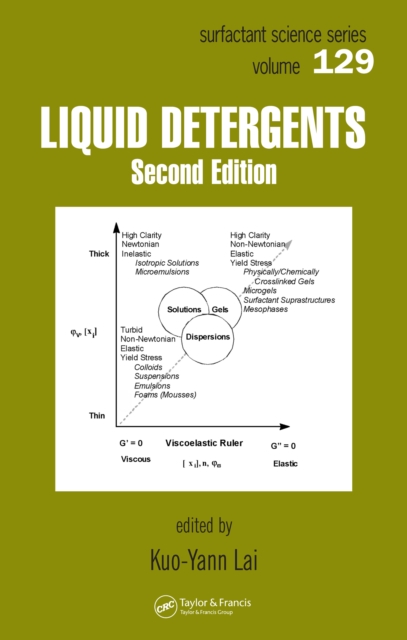
A best-seller in its first edition, Liquid Detergents, Second Edition captures the most significant advances since 1996, maintaining its reputation as a first-stop reference in all fundamental theories, practical applications, formulation technologies and manufacturing aspects of liquid detergents.
"e;Offers comprehensive coverage of the latest toxicological, technological, and nutritional developments in both natural and synthetic antioxidants used in the food industry.