This Expo book brings together leading academic and policymaker experts to reflect on the significant challenges faced by lagging regions in participating in the European Unions Research and Innovation Strategies for Smart Specialisation (RIS3) programme.
One of the leading texts in the field, The Economics of Recreation, Leisure and Tourism is the ideal introduction to the fundamentals of economics in these industries, helping you to enjoy and pass an economics module as part of tourism, recreation, events or sport management degrees.
One of the leading texts in the field, The Economics of Recreation, Leisure and Tourism is the ideal introduction to the fundamentals of economics in these industries, helping you to enjoy and pass an economics module as part of tourism, recreation, events or sport management degrees.
In this book, a historical analysis of the precedents of the euro is examined within the context of the current issues affecting the Eurozone and the long-term effects of the institutional changes implemented since 2010.
In this book, a historical analysis of the precedents of the euro is examined within the context of the current issues affecting the Eurozone and the long-term effects of the institutional changes implemented since 2010.
Featuring the latest research by Brazilian-based scholars previously inaccessible to an English-speaking audience, this book is a timely, authoritative, multidisciplinary overview of social policies in Brazil during the Temer austerity and the Bolsonaro populist presidencies.
In most of the currency crises of the 1990s, the largest output falls have occurred in those emerging economies with large currency mismatches, a phenomenon that occurs when assets and liabilities are denominated in different currencies such that net worth is sensitive to changes in the exchange rate.
The dollar rose by about 35 percent in real terms from 1995 through the end of 2001, supporting the booming US economy of the late 1990s but pushing the current account deficit to a record high of almost 5 percent of GDP.
This volume is a successor of sorts to the Institute's 1986 volume Toward Renewed Economic Growth in Latin America, which blazed the trail for the market-oriented economic reforms that were adopted in Latin America in the subsequent years.
This study reviews the literature on the contribution of low inflation to economic growth and the subsequent widespread adoption of inflation targeting as a monetary policy framework.
Based on a conference held in September 2005 on the future of the International Monetary Fund, this important new book includes an overview of the challenges facing the IMF today.
The Asian crisis has sparked a thoroughgoing reappraisal of current international financial norms, the policy prescriptions of the International Monetary Fund, and the adequacy of the existing financial architecture.
The global financial crisis produced an important agreement among regulators in 2010-11 to raise capital requirements for banks to protect them from insolvency in the event of another emergency.
For decades, economic policymakers have worshipped at the altar of combating inflation, reducing public deficits, and discouraging risky behavior by investors.
The world is poised on the threshold of economic changes that will reduce the income gap between the rich and poor on a global scale while reshaping patterns of consumption.
Spurred by the success of the first stress test of US banks toward the end of the global economic crisis in 2009, stress testing of large financial institutions has become the cornerstone of banking supervision worldwide.
The Asian financial crisis of 1997-98 was devastating for the region, but policymakers at least believed that they gained a great deal of knowledge on how to prevent, mitigate, and resolve crises in the future.
Roughly once a year, the managing director of the International Monetary Fund, the US treasury secretary and in some cases the finance ministers of other G-7 countries will get a call from the finance minister of a large emerging market economy.
In September 1985, emissaries of the world's five leading industrial nations-the United States, Britain, France, Germany, and Japan-secretly gathered at the Plaza Hotel in New York City and unveiled an unprecedented effort to correct the largest set of current account and exchange rate imbalances that had ever threatened the world economy.
The dispute over Chinese exchange rate policy within the United States has generated a series of legislative proposals to restrict the discretion of the US Treasury Department in determining currency manipulation and to reform the department's accountability to the Congress.
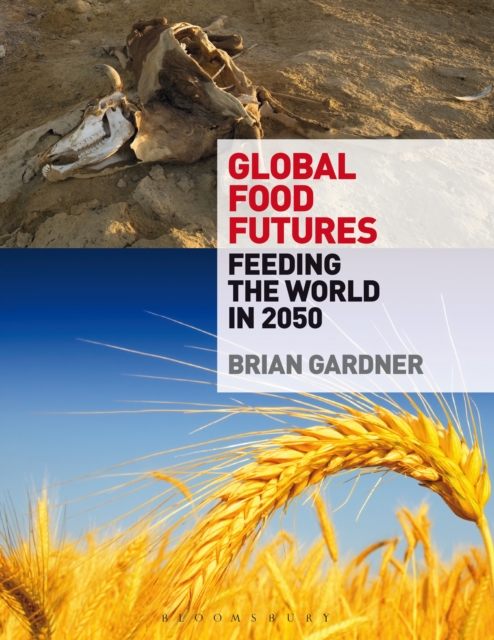
By 2050 the world will be faced with the enormous challenge of feeding 9 billion people despite being affected by climate change, rising energy costs and pressure on food growing land and other major resources.
Financialization is a set of processes which has led to a financially driven and commodified economy with rising inequality, tax avoidance, and a lack of investment in the physical and social infrastructure.
This self-contained volume brings together a collection of chapters by some of the most distinguished researchers and practitioners in the fields of mathematical finance and financial engineering.
The Western powers established the International Monetary Fund (IMF) and the World Bank after World War II as "e;"e;permanent machinery"e;"e; to anchor the Bretton Woods system.
The American dream is fading: for nearly two decades, the economy has been performing below par, the quality of life has deteriorated, and the government has not confronted the public problems that concern citizens most.
As cross-border transactions and economic integration among nations have increased, formerly neglected differences among the domestic economic policies of nations have become progressively exposed to international scrutiny.
Addressing the big questions about how technological change is transforming economies and societiesRapid technological change-likely to accelerate as a consequence of the COVID-19 pandemic-is reshaping economies and how they grow.
In the last ten to fifteen years, the Latin American and Caribbean region has undergone the most significant transformation of economic policy since World War II.
A World Bank, International Monetary Fund, and Brookings Institution publicationMore than three years have elapsed since the East Asian financial crisis erupted, threatening economic and financial stability in the region and beyond.