When a child is struggling with a learning disability or behavioral disorder, it can be overwhelming for their parents, who often do not know what to do or where to turn for help.
When a child is struggling with a learning disability or behavioral disorder, it can be overwhelming for their parents, who often do not know what to do or where to turn for help.
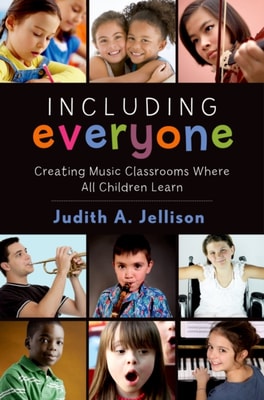
Written by an expert in the field who is both a teacher and a teacher-educator, this book is an in-depth and practical resource for educators and parents who wish to introduce music to children with hearing loss.
Debates about methods of supporting language development and academic skills of deaf or hard-of-hearing children have waxed and waned for more than 100 years: Will using sign language interfere with learning to use spoken language or does it offer optimal access to communication for deaf children?
Teaching Deaf Learners: Psychological and Developmental Foundations explores how deaf students (children and adolescents) learn and the conditions that support their reaching their full cognitive potential -- or not.
Written by an expert in the field who is both a teacher and a teacher-educator, this book is an in-depth and practical resource for educators and parents who wish to introduce music to children with hearing loss.
In Bilingualism and Bilingual Deaf Education, volume editors Marc Marschark, Gladys Tang, and Harry Knoors bring together diverse issues and evidence in two related domains: bilingualism among deaf learners - in sign language and the written/spoken vernacular - and bilingual deaf education.
In Bilingualism and Bilingual Deaf Education, volume editors Marc Marschark, Gladys Tang, and Harry Knoors bring together diverse issues and evidence in two related domains: bilingualism among deaf learners - in sign language and the written/spoken vernacular - and bilingual deaf education.
Many practical books for music educators who work with special needs students focus on students' disabilities, rather than on the inclusive classroom more generally.
Most students who are deaf or hard of hearing (DHH) struggle with acquiring literacy skills, some as a direct result of their hearing loss, some because they are receiving insufficient modifications to access the general education curriculum, and some because they have additional learning challenges necessitating significant program modifications.
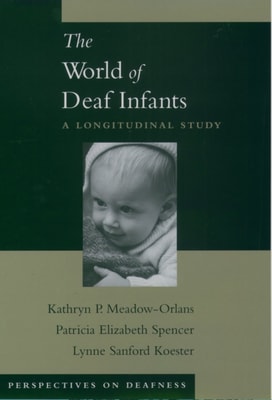
Throughout history there have been efforts to help deaf children develop spoken language through which they could have full access to the hearing world.
Taking Charge is the first empirically tested program of its kind, designed specifically to improve academic achievement and self-sufficiency for adolescent and teenage mothers, who face increased risk of dropping out and experiencing poverty.
Over the past decade there has been a significant increase in interest from educators and the general public about deafness, special education, and the development of children with special needs.
This volume is the long-awaited revision of the only textbook on primary language instruction written with classroom teachers of deaf and hard-of-hearing children (TODs) in mind.
This volume is the long-awaited revision of the only textbook on primary language instruction written with classroom teachers of deaf and hard-of-hearing children (TODs) in mind.
The Oxford Handbook of Deaf Studies in Literacy brings together state-of-the-art research on literacy learning among deaf and hard of hearing learners (DHH).
The Oxford Handbook of Deaf Studies in Literacy brings together state-of-the-art research on literacy learning among deaf and hard of hearing learners (DHH).
The relationship of language to cognition, especially in development, is an issue that has occupied philosophers, psychologists, and linguists for centuries.
This accessible guide combines evidence-based research with practical experience to help develop effective communication skills for navigating difficult or challenging situations.
Containing concise but detailed summaries on a comprehensive range of clinical scenarios and conditions likely to be encountered by trainees, paediatricians, therapists, nurses, and allied professionals in their day-to-day practice, Community Paediatrics is the ideal companion for anyone working with children in the community.
Containing concise but detailed summaries on a comprehensive range of clinical scenarios and conditions likely to be encountered by trainees, paediatricians, therapists, nurses, and allied professionals in their day-to-day practice, Community Paediatrics is the ideal companion for anyone working with children in the community.
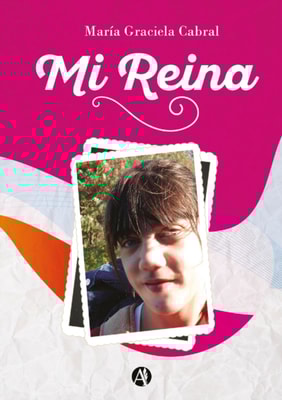
Mi Reina es un sueño que se fue gestando mientras criaba a un angel màs que especial, llamada Verònica, que padece Parálisis Cerebral desde su nacimiento y hoy tiene ya 33 años de edad.
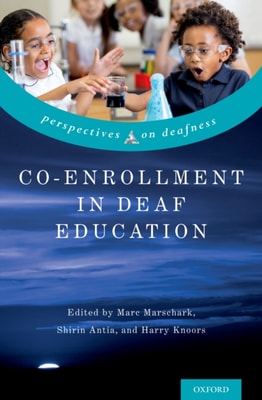
Co-enrollment programming in deaf education refers to classrooms in which a critical mass of deaf and hard-of-hearing (DHH) students is included in a classroom containing mainly hearing students and which is taught by both a mainstream teacher and a teacher of the deaf.
Co-enrollment programming in deaf education refers to classrooms in which a critical mass of deaf and hard-of-hearing (DHH) students is included in a classroom containing mainly hearing students and which is taught by both a mainstream teacher and a teacher of the deaf.
After decades of reform, America's public schools continue to fail particular groups of students; the greatest opportunity gaps are faced by those whose achievement is hindered by complex stressors, including disability, trauma, poverty, and institutionalized racism.
After decades of reform, America's public schools continue to fail particular groups of students; the greatest opportunity gaps are faced by those whose achievement is hindered by complex stressors, including disability, trauma, poverty, and institutionalized racism.
This volume presents the latest research from internationally recognized researchers and practitioners on language, literacy and numeracy, cognition, and social and emotional development of deaf learners.
This volume presents the latest research from internationally recognized researchers and practitioners on language, literacy and numeracy, cognition, and social and emotional development of deaf learners.
If teachers want to educate deaf learners effectively, they have to apply evidence-informed methods and didactics with the needs of individual deaf students in mind.
If teachers want to educate deaf learners effectively, they have to apply evidence-informed methods and didactics with the needs of individual deaf students in mind.
Since the advent of autism as a diagnosed condition in the 1940s, the importance of music in the lives of autistic people has been widely observed and studied.