This book systematically covers immunoassays for food, presenting detailed approaches such as antigen design, food matrix pre-treatment and detection format optimization for 9 classes of food hazards and nutrition constituents.
This edited book serves as a vital resource on the contributions of microorganisms to advances in nanotechnology, establishing their applications in diverse areas of biomedicine, environment, biocatalysis, food and nutrition, and renewable energy.
This book introduces readers to basic studies on and applied techniques involving lactic acid bacteria, including their bioengineering and industrial applications.
This book comprehensively describes the biological underpinnings of red meat production, discussing the current state of the science in the context of the provision of red meat products perceived by consumers to offer a quality eating experience.
The book provides an overview of bio-manufacturing techniques for the production, purification, characterization and modification of chito/chitin oligosaccharides and their monomers.
This book presents a comprehensive view on mycotoxins of agricultural as well as non-agricultural environments and their health effects in humans and animals.
The book provides essential information on some of the promising edible medicinal plants and how these possess both nutritional as well as therapeutic value.
This book provides practical information on obtaining and using a wide variety of plant based reagents for different sectors, addressing the needs and challenges in a single resource.
This book presents up-to-date information on various vector-less/direct (physical, chemical) and vector-mediated/indirect (Agrobacterium-mediated) plant transformation techniques.
This book discusses the concept of water footprint and corporate water footprint, presenting case studies on a thermal power plant in India and on the food sector.
This book comprehensively describes the biological underpinnings of red meat production, discussing the current state of the science in the context of the provision of red meat products perceived by consumers to offer a quality eating experience.
The book provides significant information on some of the promising edible medicinal plants and how these possess both nutritive as well as medicinal value.
As a key component of human survival, a safe and sufficient food supply is essential for a healthy and productive population throughout the world, so assurance that the food supply is clean and free of harmful substances is a global concern.
Modern tree fruit orchards and vineyards constitute complex production systems that are exposed to highly dynamic and stochastic natural, financial and societal forces, and face demands for increased production using fewer resources, with reduced environmental impact.
The demand for organic foods has been expanding at a steady rate, and during the COVID-19 epidemic, it increased even further, as consumers regarded these foods as healthier and better for immunity than conventional foods.
A unique resource that describes the ingredients included in an aquaculture diet, species profiles, processing methods, impacts to environment and industry, and more.
The demand for organic foods has been expanding at a steady rate, and during the COVID-19 epidemic, it increased even further, as consumers regarded these foods as healthier and better for immunity than conventional foods.
Modern tree fruit orchards and vineyards constitute complex production systems that are exposed to highly dynamic and stochastic natural, financial and societal forces, and face demands for increased production using fewer resources, with reduced environmental impact.
A unique resource that describes the ingredients included in an aquaculture diet, species profiles, processing methods, impacts to environment and industry, and more.
Food Security and Nutrition: Utilizing Undervalued Food Plants explores the potential of underutilized and indigenous food plants to enhance food and nutrition security amid global challenges, such as climate change, water scarcity, and population growth.
Lactic Acid Bacteria as Cell Factories: Synthetic Biology and Metabolic Engineering describes the most recent developments on the metabolic engineering and synthetic biology of Lactic Acid Bacteria (LAB) for production of biologically active biomolecules (enzymes, organic acids, bacteriocins, bioactive peptides, etc.
Formulations, Regulations, and Challenges of Nutraceuticals focuses on various novel micro- and nanocarriers being employed in the formulation and delivery of nutraceutical ingredients to increase their efficacy, bioavailability, safety, and stability.
This volume combines well-established state-of-the-art techniques and innovative technologies in the field of emotions and applying them to food and sensory sciences.
This text comprehensively covers the rituals, traditions and receipts of ancestral processes of bread making from multiple countries, including the scientific and technological character of the science of bread making and sourdough biotechnology.
Next Generation Nanochitosan: Applications in Animal Husbandry, Aquaculture and Food Conservation provides comprehensive and state-of-the-art-information on the application of nanochitosan for improving products, especially for the evaluation of biological active molecules, disease therapeutics, transport vehicle for DNA, targeted drug delivery, gene therapy, development of smart and high performance of fish, preservation of foods, tissue engineering, and improving the taste of aquatic and animal feeds as fish growth promoter.
This text comprehensively covers the rituals, traditions and receipts of ancestral processes of bread making from multiple countries, including the scientific and technological character of the science of bread making and sourdough biotechnology.
This edited book provides the first comprehensive overview on conventional and emerging processing technologies for the extraction and purification of proteins and/or peptides from plant sources with a special focus on subsequent product development.
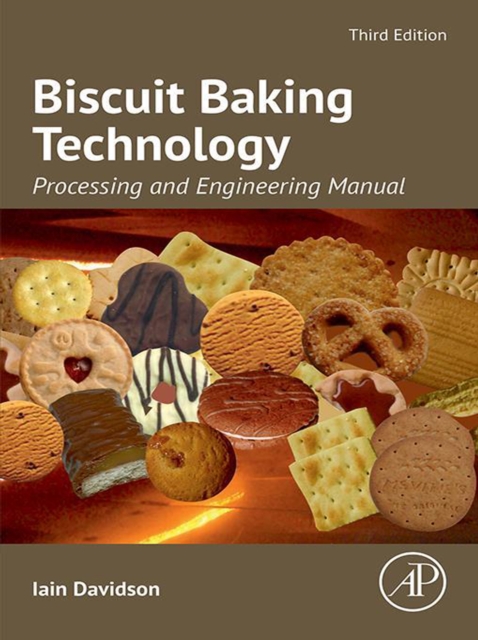
Biscuit Baking Technology: Processing and Engineering Manual, Third Edition shares over 50 years of experience in the biscuit baking industry worldwide, and is the most updated reference book for senior managers and staff involved in industrial-scale biscuit baking.
Nano/micro-Plastics Toxicity on Food Quality and Food Safety, Volume 103 in the Advances in Food and Nutrition Research series, provides in-depth reviews on recent developments in nano/micro-plastics toxicity on food quality and food safety research.
This timely and comprehensive text focuses on important recent advances in applied sustainability in the baking industry, connecting all the current methods and strategies into a single book.
**Association of American Publishers (AAP) PROSE Award Finalist in Mathematics and Statistics, 2024**Probability and Statistics for Cereals and Grains: A Guide to Measurement and Analysis is a guide to help technical people be more efficient users of statistics.
Advances in Food and Nutrition Research, Volume 104 provides the latest advances on emerging bioactive compounds with putative health benefits and their controlled release and application in foods and nutraceuticals, as well as up-to-date information on food technologies, including 3D printing, safety of raw materials, and viruses in foods.
Wine Folly: Edición Magnum, ganador del James Beard Award en 2019 al mejor libro del mundo en la categoría de Bebidas y traducido a más de 20 idiomas, es la guía definitiva para orientarse en el mundo de la enología.