Food contact materials such as packaging, storage containers and processing surfaces can pose a substantial hazard to both food manufacturer and consumer due to the migration of chemicals or other substances from the material to the food, which can cause tainting of flavours and other sensory characteristics, or even illness.
Food colour additives have been the focus of much research in the last few years, and there is increasing consumer demand for natural and safer synthetic colours.
Grapevine Breeding Programs for the Wine Industry: Traditional and Molecular Techniques summarizes recent trends in grapevine breeding, both in terms of research and practical programs.
Metabolomics is a multidisciplinary science used to understand the ways in which nutrients from food are used in the body and how this can be optimised and targeted at specific nutritional needs.
Advances in Food and Beverage Labelling reviews recent advances in labelling research and regulation, covering issues such as nutrition and hazard information, traceability, health claims and standardisation, as well as new labelling technologies and consumer issues.
Functional Marine Biomaterials: Properties and Applications provides readers with the latest information on the diverse marine environment as a resource for many new substances, including biopolymers, bioceramics, and biominerals.
Obesity is an increasing problem on a global scale, and strategies for its prevention involve experts from many disciplines including nutritionists, physicians, policy-makers and public health professionals.
Food safety is a constant challenge for the food industry, and food irradiation technology has developed significantly since its introduction, moving from isotope irradiation to the use of electron beam technology.
Flavour is a critical aspect of food production and processing, requiring careful design, monitoring and testing in order to create an appealing food product.
Wang and Hirai draw on their extensive experience to introduce recent technological advances in soft robotics for food manipulation and discuss their practical applications in the food preparation industry.
This interdisciplinary textbook provides the reader with vital information and comprehensive coverage of foodborne microbial pathogens of potential risk to human consumers.
This book provides a comprehensive overview of almond growing from a scientific and horticultural perspective, covering botany, production, processing and industrial uses.
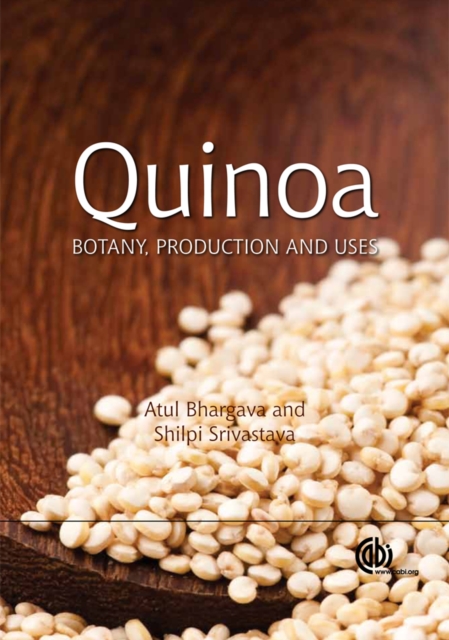
Quinoa is an invaluable crop, highlighted by the Food and Agriculture Organization of the United Nations (FAO) as one of the world's main crops for future food security.
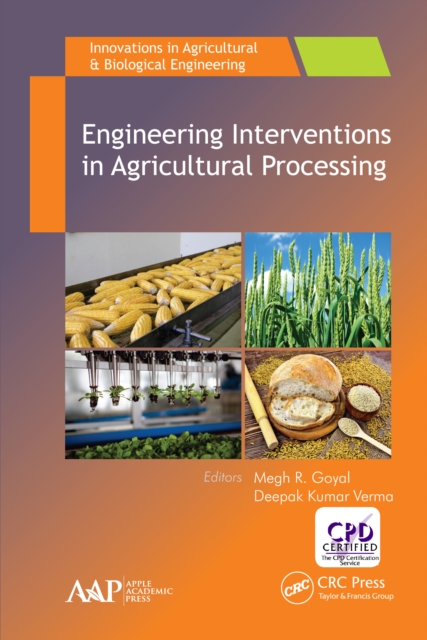
Engineering Interventions in Agricultural Processing presents recent advanced research on biological engineering, bioprocessing technologies, and their applications in agricultural food processing, and their applications in agriculture science and agricultural engineering, focusing on biological science, biological engineering, and bioprocessing technology.
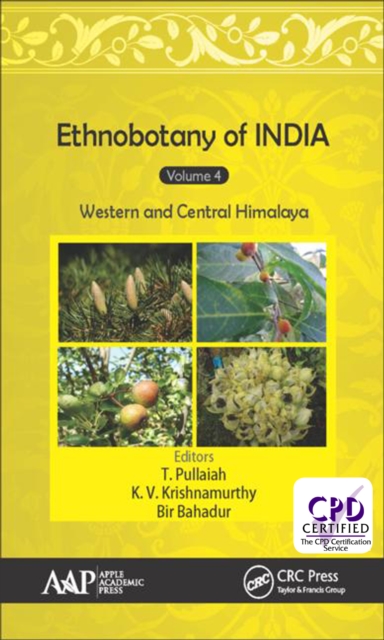
Ethnobotany of India: Volume 4: Western and Central Himalayas is the 4th volume of the 5-volume set, an informative book series on the ethnobotanical aspects of India.
In this era of climate change and food/water/natural resource crises, it is important that current advancements in technology are made taking into consideration the impact on humanity and the environment.
Stored products of agriculture and animal origin are attacked by more than 600 species of beetles, 70 species of moths, and about 355 species of mites, causing huge quantitative and qualitative losses and insect contamination in food commodities.
In agricultural education and research, the study of agricultural microbiology has undergone tremendous changes in the past few decades, leading to todays scientific farming that is a backbone of economy all over the globe.
In the recent years, considerable research has been carried out evaluating natural substances as antioxidative additives in food products, leading to novel combinations of antioxidants and the development of novel food products.
This new volume, the 7th in the Innovations in Agricultural & Biological Engineering book series, focuses on emerging trends, applications and challenges in food science and technology.
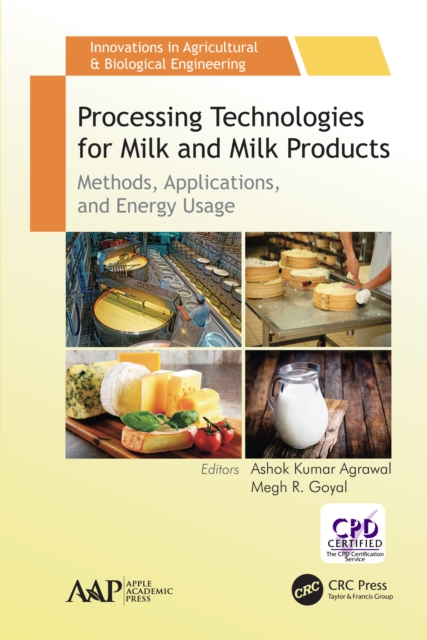
Written for and by dairy and food engineers with experience in the field, this new volume provides a wealth of valuable information on dairy technology and its applications.
This third book in the three-volume Plant Secondary Metabolites examines the relationship between environmental stress and the physiology of plants, leading to stimulation of secondary metabolites.
This second book in the three-volume Plant Secondary Metabolites covers the stimulation, extraction, and utilization of plant secondary metabolites, which are organic compounds that aid in the growth and development of plants but which are not required for the plant to survive by fighting off herbivores, pests, and pathogens.
This volume, Plant Secondary Metabolites: Volume 1: Biological and Therapeutic Significance, presents important information on the curative and therapeutic roles of secondary metabolites that are present in different natural food groups.
Ethnobotany of India: Volume 1: Eastern Ghats and Adjacent Deccan, the first of a five-volume set, provides an informative overview of human-plant interrelationships in this southern area of India.
This book presents several pre- and postharvest strategies that have been developed to modify these physiological activities, resulting in increased shelf life.
From Lonely Planet, the world's leading travel guide publisher, Wine Trails, the first book in Lonely Planet's "e;Perfect Weekends"e; series, introduces the secret gems in well-known regions such as Napa and Sonoma, Tuscany, Burgundy and Rioja, and also explores off-the-beaten-path regions in Georgia, Greece and beyond.
This new book reports on the emerging and novel technologies for the development of functional foods from plants, providing a comprehensive look into their characterization, validation, and transformation into novel products.
Today, with the understanding of the importance of functional natural products, the interest of people in these products and the increase in the use of these products have caused scientists to diversify their research on these issues.